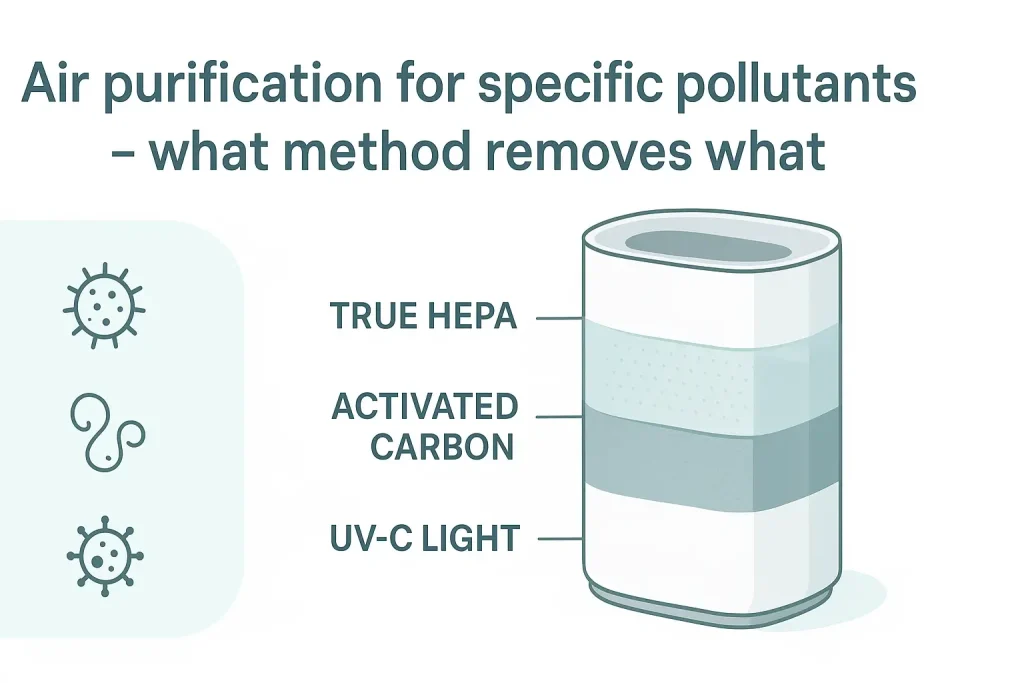
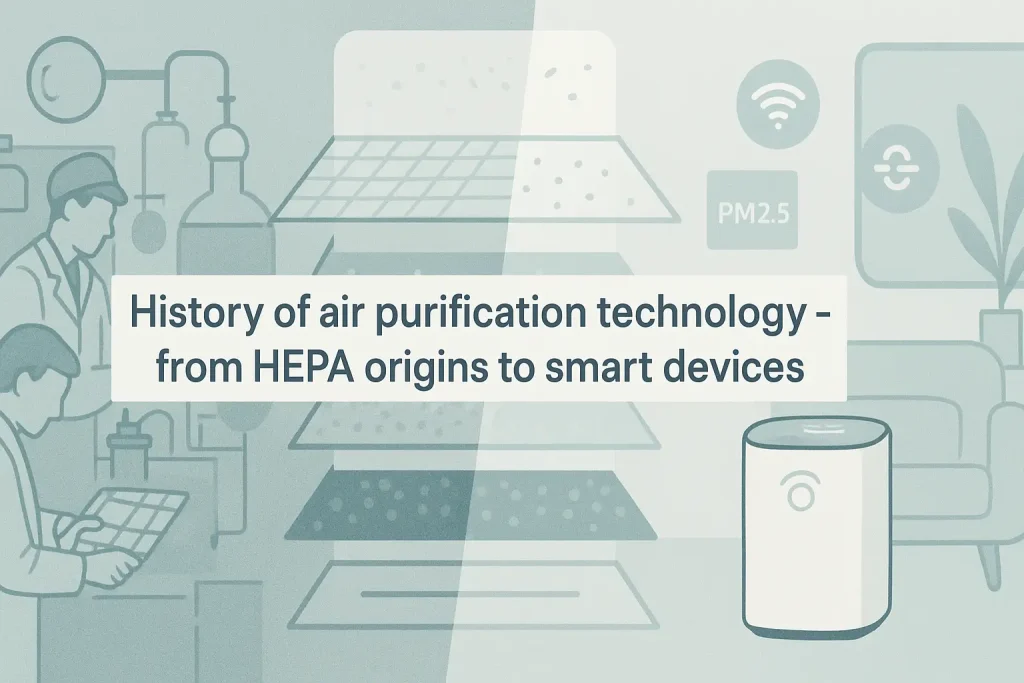
Most air purifiers sold today pair a HEPA filter with an activated carbon stage, and most buyers ignore the carbon part completely. That is a mistake that leaves VOCs, odors, and chemical fumes floating in your air even while the particle count drops to zero.
Activated carbon filtration is the only consumer technology that removes gaseous pollutants from indoor air. It does not catch dust. It does not lower PM2.5. It adsorbs the chemicals you cannot see and the odors you definitely can.
This guide covers every subcategory of activated carbon filtration in air purification: granular carbon, pelletized carbon, impregnated carbon, carbon cloth, carbon-zeolite blends, and thin carbon sheet filters. You will learn how adsorption actually works at the molecular level, why carbon weight determines VOC capacity, which pollutants carbon captures and which ones sail right through, and exactly when your carbon filter is spent.
What Is Activated Carbon Filtration in an Air Purifier?
Activated carbon filtration is a gas-phase adsorption technology that removes volatile organic compounds (VOCs), odors, and chemical fumes from indoor air. It is the only filter stage in a consumer air purifier that captures gases: HEPA filters trap particles, and activated carbon traps molecules.
| Photo | Popular Air Purifiers | Price |
|---|---|---|

|
Air Purifiers for Home Large Room up to 1500ft², Tailulu H13 True HEPA Air Purifier for Pets Dust Odor Smoke, Air Purifier for Bedroom with 15dB Quiet Sleep Mode for Bedroom Office Living Room | Check Price On Amazon |
|
Afloia Air Purifier for Home, 4-in-1 Washable Filter for Allergies, Covers Up to 1076 ft², Quiet Operation, Auto Shut-Off & Night Light, Removes Pet Dander, Pollen, Dust, Mold, and Smoke, White,Pluto | Check Price On Amazon |

|
Nuwave OxyPure ZERO Air Purifier with Washable and Reusable Bio Guard Tech Air Filter, Large Room Up to 2002 Ft², Air Quality Monitor, 0.1 Microns, 100% Capture Irritants like Smoke, Dust, Pollen | Check Price On Amazon |

|
Air Purifiers for Home Large Room Up to 1,996 Ft², EOEBOT Air Purifier for Home Pets with Washable Filter, Quiet Sleep Mode, Air Quality Monitor, Air Purifier for Bedroom, Pet Hair, Dust, Smoke, White | Check Price On Amazon |
|
Afloia 2 IN 1 Air Purifier with Humidifier Combo, 3-Stage Filters for Home Allergies Pets Hair Smoker Odors, Evaporative Humidifier, Auto Shut Off, Quiet Air Cleaner with Seven Color Light,White | Check Price On Amazon |
A activated carbon filter consists of carbon material that has been processed to create an enormous internal pore structure. One gram of activated carbon contains over 1,000 square meters of internal surface area. Pollutants enter the pores and stick to the carbon surface through van der Waals forces: weak intermolecular attractions that hold gas molecules in place.
This happens because the activation process (steam treatment or chemical activation at 600-900°C) creates micropores smaller than 2 nanometers in diameter. Gas molecules diffuse into these micropores and become physically trapped on the pore walls. The technical term is physisorption, and it is entirely reversible: heat or pressure can release the trapped molecules, which is how carbon filters are sometimes regenerated in industrial settings.
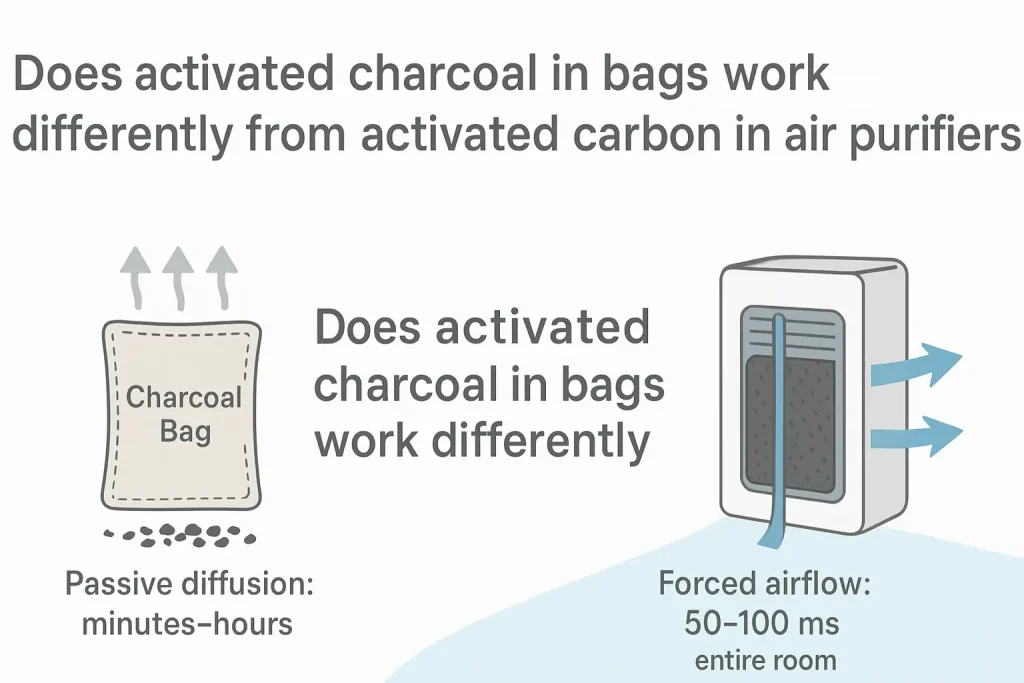
This only occurs when the carbon has sufficient contact time with the airstream. Contact time depends on carbon bed depth and airflow rate. A thin carbon sheet with 0.1 inches of carbon and air moving at 300 CFM provides almost zero contact time and negligible VOC removal. A deep carbon bed with 2-3 inches of granular carbon and air at 100 CFM provides meaningful contact time and measurable VOC reduction.
If contact time is insufficient, the result is VOC-laden air passing straight through the filter with no adsorption occurring. Fix it by choosing a purifier with a deep carbon bed (at least 1 inch of granular carbon) and running it at a fan speed that allows adequate dwell time inside the carbon stage.
Quick Reference
Activated Carbon and Air Purifier Terms – Searchable Glossary
Definitions for every technical term used in this guide. Type to search.
— The process by which gas molecules adhere to the surface of a solid (the carbon pore walls). Distinct from absorption, where one substance dissolves into another. Activated carbon works by adsorption: molecules stick to the immense internal surface area without being absorbed into the carbon structure.
— Carbon material (typically from coconut shell, coal, or wood) processed with steam or chemicals at 600-900°C to create a microporous structure with 500-1,500 square meters of internal surface area per gram. Used in air purification to capture gaseous pollutants including VOCs, formaldehyde, benzene, and odours.
— The total mass of activated carbon in a filter. The single most important specification for VOC removal capacity. Thin carbon sheet filters may contain less than 0.5 lbs. High-performance carbon filters contain 10-30 lbs. More carbon weight equals more adsorption sites and longer filter life before saturation.
— Gaseous chemicals emitted from household products including paint, furniture, flooring, cleaning products, air fresheners, and adhesives. Common indoor VOCs include formaldehyde, benzene, toluene, and xylene. EPA notes indoor VOC concentrations are 2 to 10 times higher than outdoors. Removed by activated carbon filtration, not by HEPA.
— The point at which a carbon filter can no longer capture incoming pollutants and gases begin passing through to the outlet airstream. Occurring when all available adsorption sites are occupied. A saturated carbon filter shows breakthrough for lower-molecular-weight VOCs first, then progressively heavier compounds.
— Activated carbon treated with chemical additives (typically potassium permanganate, potassium hydroxide, or metal oxides) to enhance removal of specific pollutants. Potassium-permanganate-impregnated carbon targets formaldehyde and hydrogen sulfide. Standard activated carbon has limited formaldehyde capacity without impregnation.
— A naturally occurring aluminosilicate mineral often blended with activated carbon in air purifier filters. Zeolite has a crystalline pore structure that selectively adsorbs ammonia, some VOCs, and small polar molecules that carbon alone may not capture efficiently. Common blend ratio: 70% carbon to 30% zeolite by weight.
— Activated carbon in granular form, typically 0.5-4 mm particle size. Used in deep-bed air purifier filters. Provides the highest adsorption capacity per cubic inch because granules create airflow channels that maximize contact time while minimizing pressure drop across the filter.
— A thin fabric-like carbon filter material used in budget and compact air purifiers. Contains minimal carbon mass (often under 0.2 lbs). Provides basic odor control but negligible VOC reduction due to low carbon weight and short contact time. Found in most sub-$150 air purifiers.
— The time an airstream spends passing through the carbon bed, measured in fractions of a second. Longer contact time allows more gas molecules to diffuse into micropores and adsorb. Determined by carbon bed depth and airflow velocity. Deep beds at moderate fan speeds maximize contact time.
How Does Activated Carbon Actually Remove Pollutants from Indoor Air?
Activated carbon removes gaseous pollutants through physical adsorption: gas molecules enter the micropore structure and adhere to the carbon surface via weak intermolecular forces. The process is purely physical, not chemical, and works on any gas molecule small enough to enter the pores.
This happens because the steam activation process creates a vast network of micropores (under 2 nm), mesopores (2-50 nm), and macropores (over 50 nm) throughout each carbon granule. Micropores provide the overwhelming majority of adsorption sites. According to the EPA’s Indoor Air Quality guidance on gas-phase filtration, the internal surface area of activated carbon typically ranges from 500 to 1,500 square meters per gram, with coconut-shell-based carbon at the high end of that range.
This only occurs when three conditions are met simultaneously. First, the pollutant molecule must be smaller than the pore diameter to enter the pore structure. Second, the molecule must have sufficient affinity for the carbon surface (determined by molecular weight, polarity, and boiling point). Third, the air must spend enough time in the carbon bed for diffusion into the micropores to occur.
If any condition fails, the result is zero adsorption for that pollutant. Very small molecules like formaldehyde (molecular weight 30) pass through standard carbon quickly because they have low affinity and short retention time. This is why formaldehyde-specific filters use impregnated carbon with chemical reactants that convert formaldehyde into a trapped compound. Large molecules above 300 molecular weight may not enter the micropores at all.
Fix adsorption failure by matching the carbon type to your specific pollutant. Standard coconut carbon handles benzene, toluene, and most VOC odors effectively. Impregnated carbon targets formaldehyde and acidic gases. Carbon-zeolite blends add ammonia and amine capture. One carbon type cannot efficiently capture every gas-phase pollutant.
Once a molecule adsorbs onto a carbon pore surface, it remains there until the pore site reaches equilibrium with the surrounding air concentration. When VOC levels in the room drop, some lighter molecules may desorb (release back into the air). This desorption effect is why carbon filters can appear to emit odors when the purifier is turned off after heavy use: trapped molecules slowly release from the saturated carbon.
Air Quality Data
Activated Carbon Filtration – What the Research Shows
Sources: EPA Indoor Air Quality, ASHRAE, peer-reviewed environmental science journals
What Pollutants Does Activated Carbon Capture and Which Ones Does It Miss?
Activated carbon captures VOCs including benzene, toluene, xylene, and most hydrocarbon-based solvents. It also captures many odorous compounds, cooking fumes, tobacco smoke odor, and some chlorinated compounds. It captures compounds with molecular weights between roughly 40 and 300 g/mol with boiling points above 0°C.
Activated carbon completely misses all particulate matter: PM2.5, PM10, dust, pollen, pet dander, mold spores, bacteria, and viruses. It also misses carbon dioxide and carbon monoxide. These are particles and small inorganic gases that carbon does not effectively adsorb. HEPA filtration is what captures particles.
This happens because particle filtration and gas adsorption use completely different physical mechanisms. HEPA captures particles through impaction, interception, and diffusion within a dense fiber mat. Carbon captures gases through molecular-scale surface interactions inside nanopores. A carbon filter has zero mechanical filtration efficiency for particles above 0.01 microns.
For a complete list of what standard coconut-shell activated carbon captures effectively, moderately, and poorly, use the table below to match pollutant types to expected removal efficiency.
Filter Guide
Activated Carbon Pollutant Removal Efficiency by Compound
Standard coconut-shell activated carbon at sufficient weight (5+ lbs) and contact time. Impregnated carbon may show different results.
| Pollutant | Type | Removal Efficiency | Notes |
|---|---|---|---|
| Benzene | VOC | High (80-95%) | Well-adsorbed by standard carbon |
| Toluene | VOC | High (85-95%) | Excellent carbon affinity |
| Xylene | VOC | High (85-95%) | Higher molecular weight aids adsorption |
| Formaldehyde | VOC | Low (10-30%) standard carbon | Requires impregnated carbon or chemisorption media |
| Cooking odors | Odor mix | High (80-90%) | Broad-spectrum odor capture |
| Tobacco smoke odor | Complex mix | High (75-90%) | Carbon captures odor components. Particulates require HEPA |
| Ammonia | Inorganic gas | Poor (under 20%) | Requires zeolite blend or acid-impregnated carbon |
| Hydrogen sulfide | Acid gas | Moderate (40-60%) | Caustic-impregnated carbon improves capture |
| PM2.5, dust, pollen, dander | Particulates | Zero | Carbon does not capture particles. Requires HEPA |
| Carbon dioxide (CO2) | Inorganic gas | Zero | Molecular weight too low. Ventilation required |
Removal efficiency ranges represent performance in deep-bed carbon filters with 5+ lbs of carbon at moderate airflow. Thin carbon sheet filters will show substantially lower efficiency across all categories. Source: EPA gas-phase filtration guidance, peer-reviewed adsorption studies.
For most homes with general VOC concerns like cooking odors, paint fumes, and cleaning product smells, standard coconut-shell activated carbon in a filter with at least 3-5 lbs of carbon provides meaningful reduction. If your primary concern is formaldehyde from new furniture or building materials, standard carbon will disappoint you: you need impregnated carbon or a dedicated chemisorption media like the IQAir V5-Cell.
Carbon Weight Is the Single Most Important Specification for VOC Removal
Carbon weight, measured in pounds or grams, is the total mass of activated carbon inside the filter. It determines the total number of adsorption sites available, which directly sets both the initial VOC removal efficiency and the total grams of VOCs the filter can capture before saturation.
This happens because each gram of activated carbon provides roughly 1,000 square meters of adsorption surface. A filter with 0.3 lbs (136 grams) of carbon provides approximately 136,000 square meters of total surface area. A filter with 15 lbs (6,800 grams) of carbon provides approximately 6.8 million square meters. The difference in VOC capacity is roughly 50-fold.
This only matters when VOC concentrations are high enough to saturate the available sites. In a room with very low VOC levels (under 100 ppb total VOCs), even a thin carbon sheet may provide several months of effective adsorption before breakthrough. In a room with fresh paint, new furniture, or active renovation, a thin carbon sheet saturates within days or weeks.
If carbon weight is too low for the VOC load, the result is rapid breakthrough: contaminants pass through the filter unadsorbed and return to room air. The filter becomes a VOC recirculator rather than a VOC remover. Fix it by selecting a purifier with carbon weight appropriate to your VOC sources. Use the table below to match carbon weight to your specific indoor air situation.
Performance Data
Activated Carbon Weight Comparison – Top Air Purifiers by Carbon Mass
Source: Manufacturer specifications. Carbon weight in pounds (lbs) per filter.
Budget air purifiers under $150 almost universally use thin carbon sheets with less than 1 pound of carbon. These provide basic odor reduction for small rooms with low VOC loads. A Coway AP-1512HH replacement filter contains roughly 0.7 lbs of carbon pellets plus a carbon-coated sheet: enough for a 200-square-foot bedroom with typical household odors but insufficient for significant VOC reduction from renovation or chemical sources.
Types of Activated Carbon Filters: Granular, Pelletized, Impregnated, and Thin Sheet
Activated carbon filters come in four distinct physical forms, and the form determines both the adsorption capacity and the airflow characteristics of the filter. The four types are granular activated carbon (GAC), pelletized carbon, impregnated carbon, and carbon-impregnated cloth or thin sheet.
Granular activated carbon is the loose, irregularly shaped carbon form used in deep-bed filters. Granules are typically 0.5-4 mm in size. The irregular shape creates airflow channels between granules that maximize contact time without excessive pressure drop. Austin Air HealthMate filters use 15 lbs of granular carbon with zeolite in a deep-bed configuration that the airstream passes through vertically.
Pelletized carbon is activated carbon formed into uniform cylindrical pellets, typically 2-4 mm in diameter. Pellets create lower pressure drop than granules at the same bed depth, allowing higher airflow through the carbon stage. The trade-off is reduced external surface area per gram compared to irregular granules, which slightly lowers the adsorption rate for fast-moving contaminants.
Impregnated carbon is standard activated carbon that has been chemically treated to add targeted pollutant removal capability. Potassium-permanganate-impregnated carbon oxidizes formaldehyde into formic acid, which remains trapped on the carbon surface. Potassium-hydroxide-impregnated carbon neutralizes acid gases including hydrogen sulfide and sulfur dioxide. The impregnation process occupies some pore volume, reducing the total VOC capacity for non-target pollutants by 5-15%.
Thin carbon sheet filters are non-woven fabric or foam sheets sprayed or coated with carbon powder. These are the most common carbon filter type in sub-$150 air purifiers. A typical thin carbon sheet contains 0.1-0.3 lbs of carbon powder bonded to a polyester or polyurethane substrate. Contact time is near zero at normal airflow rates. These filters provide odor masking more than actual VOC removal.
If your air purifier uses a thin carbon sheet and you have genuine VOC concerns, the result is negligible chemical removal regardless of the purifier’s CADR rating or HEPA efficiency. Fix it by adding a standalone deep-bed carbon filter, upgrading to a purifier with a substantial carbon stage, or addressing the VOC source directly through ventilation and source control.
Filter Guide
Carbon Filter Types Compared – Form, Capacity, and Best Use Case
Use the table below to match carbon filter type to your specific indoor air quality needs.
| Filter Type | Typical Carbon Weight | VOC Removal | Odor Control | Formaldehyde | Best Use Case |
|---|---|---|---|---|---|
| Granular (GAC) | 3-30 lbs | High | Excellent | Low-Moderate | General VOCs, chemicals, smoke odor |
| Pelletized | 2-20 lbs | High | Excellent | Low-Moderate | High-airflow systems, whole-house |
| Impregnated Carbon | 5-20 lbs | High (targeted) | Excellent | High | Formaldehyde, acid gases, specific chemicals |
| Thin Carbon Sheet | 0.1-0.5 lbs | Minimal | Basic | Negligible | Light cooking odors in small rooms |
Carbon weights are typical ranges for each filter type across major air purifier brands. VOC removal ratings are for a deep carbon bed at sufficient contact time. Thin sheets at high airflow provide effectively zero VOC removal. Source: Manufacturer specifications, peer-reviewed carbon adsorption studies.
How Long Does an Activated Carbon Filter Last Before It Needs Replacement?
An activated carbon filter in a typical home environment lasts 3 to 6 months before VOC breakthrough becomes measurable. In homes with high VOC sources (new furniture, active renovation, attached garage, smoking), the filter may saturate in 4 to 8 weeks. In homes with very low VOC levels and the purifier used intermittently, a deep-bed carbon filter can last 12 months or more.
This happens because carbon has a finite number of adsorption sites. Each site can hold exactly one molecule. Once all sites in the micropore structure are occupied, incoming gas molecules pass through unadsorbed. The total grams of VOCs a filter can capture before saturation equals roughly 10-30% of its carbon weight, depending on the molecular weight of the pollutants and the humidity level during operation.
This only applies when the carbon is genuinely being used to capture VOCs. If your home has no significant VOC sources and the carbon filter is primarily handling ambient odors, the saturation rate is much slower because the total mass of odor compounds in the air is tiny (often under 50 ppb total).
If you continue running a saturated carbon filter, the result is zero ongoing VOC removal. Worse, some previously adsorbed VOCs may desorb when room VOC concentrations drop, turning the filter into a source of pollutants rather than a sink. Fix it by replacing the carbon filter on the manufacturer-recommended schedule, or sooner if you smell odors returning to the outlet airstream. The return of odors is the most reliable consumer-level indicator of carbon saturation.
There is no universal sensor or indicator that tells you carbon is saturated. Unlike a HEPA filter that shows visible discoloration when loaded with particles, saturated carbon looks identical to fresh carbon. You must track replacement intervals by calendar time and adjust based on your specific VOC exposure conditions. A VOC air quality monitor placed at the purifier outlet can confirm when VOC levels stop dropping during operation, indicating carbon saturation.
Can You Reactivate or Reuse a Saturated Activated Carbon Filter?
You cannot effectively reactivate a saturated activated carbon air purifier filter at home. Industrial carbon reactivation requires heating the carbon to 600-900°C in an oxygen-free environment to drive off adsorbed molecules. Your kitchen oven cannot reach these temperatures, and heating carbon in normal air causes it to combust rather than regenerate.
Some online sources suggest placing a carbon filter in direct sunlight for several hours to release trapped VOCs. This method may desorb a small fraction of the most lightly held compounds (low molecular weight, low boiling point) but removes essentially none of the higher-molecular-weight VOCs that represent the majority of adsorbed mass. The filter remains over 90% saturated after sunlight exposure.
This happens because physisorption creates a bond energy of 5-40 kJ/mol between the adsorbate and the carbon surface. Sunlight heating raises the carbon temperature by perhaps 20-40°C above ambient. That provides enough energy to desorb only the weakest-held molecules. The activation energy required to desorb toluene or xylene from micropores is far higher than solar heating can supply.
If you attempt to bake a carbon filter in a home oven, the result is filter destruction and potentially a fire. Activated carbon ignites at approximately 300°C in air. The binders and substrates in most carbon filters (polyester, polyurethane, adhesives) melt or ignite at much lower temperatures. Discard saturated carbon filters and install replacements. There is no safe home regeneration method that produces meaningful carbon recovery.
Activated Carbon vs Other Gas-Phase Filtration Technologies
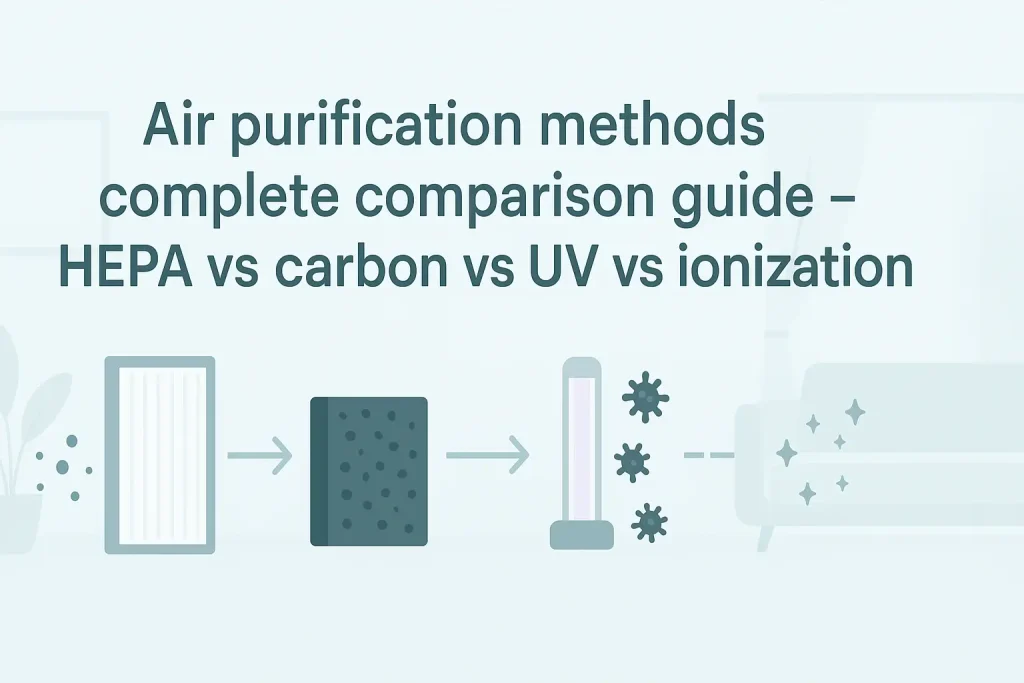
Activated carbon adsorption is one of several gas-phase filtration technologies. The others include zeolite adsorption, photocatalytic oxidation (PCO), ozone generation (not recommended), and potassium permanganate chemisorption. Each technology targets different pollutants and has different advantages, limitations, and safety profiles.
Zeolite is a naturally occurring aluminosilicate with a crystalline pore structure that selectively adsorbs ammonia, some amines, and small polar molecules. Zeolite pores are uniform in size (typically 4-8 angstroms depending on the zeolite type) compared to the wide pore size distribution in activated carbon. Zeolite is most commonly blended with carbon at 30% zeolite to 70% carbon by weight. The Austin Air HealthMate Plus uses a carbon-zeolite blend with potassium iodide impregnation for broad-spectrum gas removal.
Photocatalytic oxidation (PCO) uses UV light on a titanium dioxide catalyst to break down VOCs into carbon dioxide and water. In theory, PCO provides continuous destruction rather than adsorption. In practice, PCO systems in consumer air purifiers have shown incomplete oxidation that produces formaldehyde and other partial oxidation byproducts as intermediates. The EPA has noted concerns about PCO byproduct formation in occupied spaces. PCO is not a direct substitute for activated carbon at the consumer level.
Ozone generators intentionally produce ozone at concentrations far above the 0.050 ppm CARB safety limit, claiming to oxidize odors and VOCs. Ozone reacts with some VOCs but the reaction products include ultrafine particles, aldehydes, and other irritants. The EPA and the American Lung Association specifically advise against ozone generators in occupied spaces. For ozone-based air treatment risks, our guide on UV and ozone air purification system safety covers the evidence in detail.
For most residential VOC and odor concerns, activated carbon with sufficient weight (3+ lbs) and adequate contact time remains the safest, most proven, and most broadly effective gas-phase filtration technology available in consumer air purifiers.
Myth vs Fact
Activated Carbon Myths Debunked – What the Evidence Actually Shows
Separating fact from fiction on the most common activated carbon misconceptions. Sources: EPA, ASHRAE, peer-reviewed adsorption research.
✗ Myth
All air purifiers with a carbon filter remove VOCs equally well. The carbon stage is present, so chemical pollutants are handled.
✓ Fact
Carbon weight determines VOC removal capacity. A thin carbon sheet with 0.2 lbs captures negligible VOCs. A deep-bed carbon filter with 15 lbs removes 80-95% of common VOCs like benzene and toluene. According to peer-reviewed adsorption studies, VOC breakthrough time is directly proportional to carbon mass: a filter with 50 times more carbon lasts roughly 50 times longer before saturation.
✗ Myth
Activated carbon filters remove formaldehyde effectively. It is a VOC, and carbon captures VOCs.
✓ Fact
Standard activated carbon has low formaldehyde affinity because formaldehyde (molecular weight 30) is too small and too volatile for strong physisorption. Research published in the journal Carbon shows standard coconut carbon removes only 10-30% of formaldehyde at typical indoor concentrations. Impregnated carbon with potassium permanganate or amine-based treatments is required for meaningful formaldehyde removal. Most consumer air purifiers do not use impregnated carbon.
✗ Myth
You can reactivate a saturated carbon filter by leaving it in sunlight for a few hours.
✓ Fact
Sunlight heating removes only the most weakly adsorbed compounds. The filter remains over 90% saturated for VOCs like toluene and xylene. Industrial carbon reactivation requires 600-900°C in an oxygen-free environment: conditions impossible to achieve at home and dangerous to attempt. A saturated carbon filter must be replaced. There is no effective home regeneration method.
✗ Myth
An activated carbon filter will last as long as the HEPA filter it is paired with.
✓ Fact
Carbon filters typically saturate in 3-6 months while HEPA filters last 6-12 months in normal conditions. In high-VOC environments, the carbon may saturate in 4-8 weeks while the HEPA still has months of remaining life. AHAM testing and manufacturer guidance both recommend replacing carbon stages more frequently than HEPA stages. Many combo filters pair a long-life HEPA with a shorter-life carbon, requiring replacement of the entire assembly when the carbon saturates.
✗ Myth
Activated carbon removes carbon dioxide (CO2) from indoor air.
✓ Fact
Activated carbon has negligible CO2 adsorption at room temperature and atmospheric pressure. CO2 (molecular weight 44) is a small, non-polar molecule with very low carbon affinity under normal indoor conditions. No consumer air purifier reduces indoor CO2. Elevated CO2 requires ventilation: opening windows or running an HRV/ERV system. ASHRAE Standard 62.1 recommends maintaining indoor CO2 below 1,000 ppm through outdoor air exchange.
How to Choose an Air Purifier with Adequate Activated Carbon for Your Situation
Choosing an air purifier with adequate carbon starts with identifying your specific gas-phase pollutant sources, then matching carbon type and weight to those pollutants. The decision process has four steps: identify your VOC sources, determine the required carbon type, calculate the minimum carbon weight for your room size, and verify that the purifier provides sufficient contact time at the fan speed you will actually use.
For a home with cooking odors and occasional cleaning product smells in a 200-square-foot kitchen, a purifier with 1-3 lbs of granular carbon provides adequate performance. The Winix 5500-2 with its AOC (Advanced Odor Control) carbon pellet filter containing approximately 1.2 lbs of carbon handles this use case effectively at a unit price around $150.
For a home with benzene and VOC sources from an attached garage, new furniture off-gassing, or renovation chemicals, you need a deep-bed carbon filter with 5-15 lbs of carbon. The IQAir HealthPro Plus with its V5-Cell gas-phase filter provides multi-media gas removal including impregnated alumina and activated carbon for broad-spectrum VOC control. The Austin Air HealthMate uses 15 lbs of carbon-zeolite blend for maximum adsorption capacity per dollar.
For formaldehyde specifically, standard carbon will not work, regardless of weight. The IQAir GC MultiGas uses dedicated chemisorption cartridges designed for formaldehyde and other low-molecular-weight aldehydes. The Austin Air HealthMate Plus uses potassium-iodide-impregnated carbon-zeolite that captures formaldehyde more effectively than standard carbon. These are the only consumer-level options with documented formaldehyde removal data.
If your purifier uses a thin carbon sheet and you need real VOC removal, the result is frustration despite the HEPA performance. Fix it by either replacing the unit with a deep-bed carbon model or considering whether a DIY solution or portable air purifier comparison reveals that a different approach (ventilation, source control, or a dedicated carbon canister) serves your needs better than a consumer air purifier alone.
Activated Carbon Filter Maintenance: What You Need to Know
Activated carbon filters require no cleaning because cleaning would damage the carbon structure and the filter medium. You cannot wash, vacuum, or brush a carbon filter. The only maintenance action is scheduled replacement. Some air purifiers with granular carbon beds allow you to pour out spent carbon and refill with fresh granules, but this option is rare in consumer units.
Most carbon filters are integrated into a combination filter assembly alongside the HEPA stage. When the carbon saturates, you replace the entire assembly even if the HEPA stage still has remaining life. This is a deliberate design choice by manufacturers to simplify maintenance. It also means your annual filter cost is driven primarily by carbon replacement intervals rather than HEPA loading.
For units with separate carbon pre-filters or carbon stages that sit upstream of the HEPA, you can replace the carbon independently. The carbon pre-filter in many Coway and Winix units can be replaced every 3 months while the HEPA continues for 12 months. Check your specific model’s filter configuration.
The pre-filter maintenance process for air purifiers with washable pre-filters does not apply to the carbon stage. Do not wash a carbon filter under any circumstances. Water fills the micropores and destroys adsorption capacity permanently. If your pre-filter is a separate washable mesh upstream of the carbon, wash the pre-filter only.
Activated Carbon and Humidity: The Performance Impact Most Buyers Miss
High indoor humidity reduces activated carbon VOC adsorption capacity by 20-40% compared to dry conditions. Water vapor competes with VOC molecules for adsorption sites in the carbon micropores. At relative humidity above 70%, water molecules occupy a significant fraction of the available pore volume, leaving fewer sites for VOC capture.
This happens because water is a small, polar molecule that readily diffuses into carbon micropores. While water has lower carbon affinity than most VOCs, the overwhelming concentration of water vapor in humid air (thousands of ppm compared to VOC concentrations in the ppb to low ppm range) means water molecules occupy many sites through sheer numerical dominance.
This only becomes a significant performance issue above roughly 60% relative humidity. Below 50% RH, the competitive adsorption effect is small enough that VOC removal remains near the filter’s rated capacity. In a basement with 80% RH, expect noticeably reduced carbon performance and shorter filter life.
If you live in a humid climate or are using a carbon-equipped air purifier in a basement, bathroom, or laundry room, the result is faster carbon saturation and lower peak VOC removal efficiency. Fix it by running a dehumidifier in the same space to keep relative humidity below 55%, which preserves carbon performance and extends filter life. Dehumidification also reduces mold growth risk independent of the air purifier’s function.
When Activated Carbon Filtration Is Not the Right Solution
Activated carbon is the wrong solution when your primary concern is particulate matter: PM2.5, dust, pollen, pet dander, mold spores, or bacteria. For particles, a True HEPA air purifier with adequate CADR for your room size is the correct choice. Carbon addresses gases. HEPA addresses particles. The two technologies solve completely different problems.
Activated carbon is also the wrong solution when your indoor air quality problem is primarily ventilation-related rather than pollutant-source-related. If your home has high CO2 (above 1,000 ppm), stale air, or humidity buildup, the solution is increased outdoor air exchange through windows or mechanical ventilation. No air purifier, carbon or otherwise, reduces CO2 or replaces oxygen. For understanding what indoor air quality standards from EPA, WHO, and ASHRAE actually require for ventilation and contaminant levels, these standards clarify when filtration versus ventilation is the appropriate intervention.
Activated carbon cannot compensate for ongoing high-rate VOC emissions. If you have an active source (wet paint, uncured foam, continuous solvent use), carbon saturates rapidly and provides diminishing returns after the first few hours. Source control and ventilation during the active emission period are more effective and more economical than trying to adsorb a continuous high-concentration VOC stream.
For homes considering duct cleaning versus portable air purification for overall IAQ value, activated carbon in portable units provides targeted gas removal where you place the purifier. Duct cleaning removes particulate deposits from HVAC systems but does not provide ongoing gas-phase filtration. The two approaches serve different purposes and are often complementary rather than alternatives.
Filter Guide
When Carbon Works and When It Does Not – Problem-to-Solution Matrix
Use the table below to determine whether activated carbon is the right tool for your specific indoor air quality problem.
| IAQ Problem | Carbon Effective? | Better Solution |
|---|---|---|
| Cooking odors | Yes | Carbon (1-3 lbs) plus range hood ventilation |
| Paint and renovation VOCs | Partially | Ventilation during emission peak plus carbon (5+ lbs) afterward |
| New furniture formaldehyde | Only with impregnated carbon | Impregnated carbon (IQAir GC MultiGas or Austin HealthMate Plus) |
| Wildfire smoke odor | Yes | Carbon (3+ lbs) plus True HEPA for PM2.5 |
| PM2.5, dust, pollen, dander | No | True HEPA with adequate CADR for room size |
| High CO2 (above 1,000 ppm) | No | Ventilation: open windows or install HRV/ERV |
| Persistent musty basement odor | Yes (symptom only) | Dehumidifier to address moisture source plus carbon for odor |
Effectiveness ratings assume appropriate carbon type and weight for each use case. Source: EPA Indoor Air Quality guidance, manufacturer specifications, ASHRAE gas-phase filtration standards.
Why Does My Air Purifier with a Carbon Filter Still Have Odors Coming Out of It?
Odors coming from your air purifier outlet indicate that the carbon filter is saturated and desorbing trapped pollutants back into the airstream. When room VOC concentrations drop below the equilibrium concentration on the carbon surface, weakly held molecules release from the carbon pores and exit through the purifier outlet. The filter has become a source rather than a sink.
This happens because adsorption equilibrium is concentration-dependent. When the carbon was actively capturing VOCs, the room concentration was higher than the carbon surface concentration, driving net adsorption. When you air out the room or the VOC source diminishes, the concentration gradient reverses and net desorption begins. This is a fundamental property of physisorption and cannot be eliminated by design.
If your purifier has been running for months without a carbon filter change, the result is a carbon bed at or near full saturation that releases odors whenever room air becomes cleaner than the filter surface. Fix it by replacing the carbon filter immediately. If odors persist after replacement, the new filter may be adsorbing residual VOCs from plastic housing components or internal materials that off-gas during initial use. This is temporary and resolves within 24-48 hours of continuous operation.
What Is the Difference Between a Carbon Pre-Filter and a Carbon Post-Filter in an Air Purifier?
A carbon pre-filter sits upstream of the HEPA filter, capturing larger particles and some VOCs before the air reaches the main filtration stage. Its primary function is extending HEPA life by trapping coarse dust and lint while providing light odor control. A carbon post-filter sits downstream of the HEPA, polishing the already-particle-filtered air for final odor and VOC removal.
The pre-filter position exposes the carbon to particle loading, which blocks carbon pores and reduces adsorption capacity over time. The post-filter position receives clean, particle-free air, preserving the full carbon surface area for gas adsorption. In units with both stages, the pre-filter handles large particles and initial odors. The post-filter provides the deeper VOC removal on already-filtered air.
Most consumer air purifiers use only a carbon pre-filter (often a thin sheet) combined with HEPA. This arrangement prioritizes HEPA protection and basic odor control. Units with dedicated deep-bed carbon stages, like the IQAir HealthPro Plus and Austin Air HealthMate, place the carbon after the HEPA in a post-filter position where particle loading cannot compromise the carbon performance.
How Do I Know if My Carbon Filter Is Genuinely Activated Carbon and Not Just a Carbon-Coated Sheet?
Genuine granular activated carbon filters feel heavy for their size and produce a rattling sound when shaken due to loose granules inside. Thin carbon-coated sheets feel light, flexible, and fabric-like with no granular movement. The weight test is the most reliable consumer-level check: a genuine GAC filter for a medium-sized air purifier weighs 2-8 lbs. A thin carbon sheet weighs 2-8 ounces.
Check the manufacturer’s published carbon weight specification. Reputable brands including Austin Air (15 lbs), IQAir (5 lbs of gas-phase media), and Alen (2.4 lbs in the Carbon filter variant) publish carbon weights. Brands that do not publish carbon weight almost universally use thin carbon sheets with minimal adsorption capacity. The absence of a carbon weight specification is itself a specification: it means the weight is too low to be a selling point.
If the product description uses phrases like “carbon filter for odor reduction” without specifying pounds or grams of carbon, you are looking at a thin sheet. Genuine deep-bed carbon filters are always advertised with their carbon weight because it is the primary performance metric. A carbon weight below 1 lb means the filter provides basic odor masking, not meaningful VOC removal, regardless of what the marketing copy claims.
Can I Add More Activated Carbon to My Existing Air Purifier to Improve VOC Removal?
You cannot add carbon to a sealed combination filter because the filter housing is not designed to be opened and refilled. If your purifier uses a separate carbon tray or canister that is user-serviceable, you can pour out spent carbon granules and refill with fresh bulk activated carbon granules. This capability is rare in consumer units and common in commercial and industrial air scrubbers.
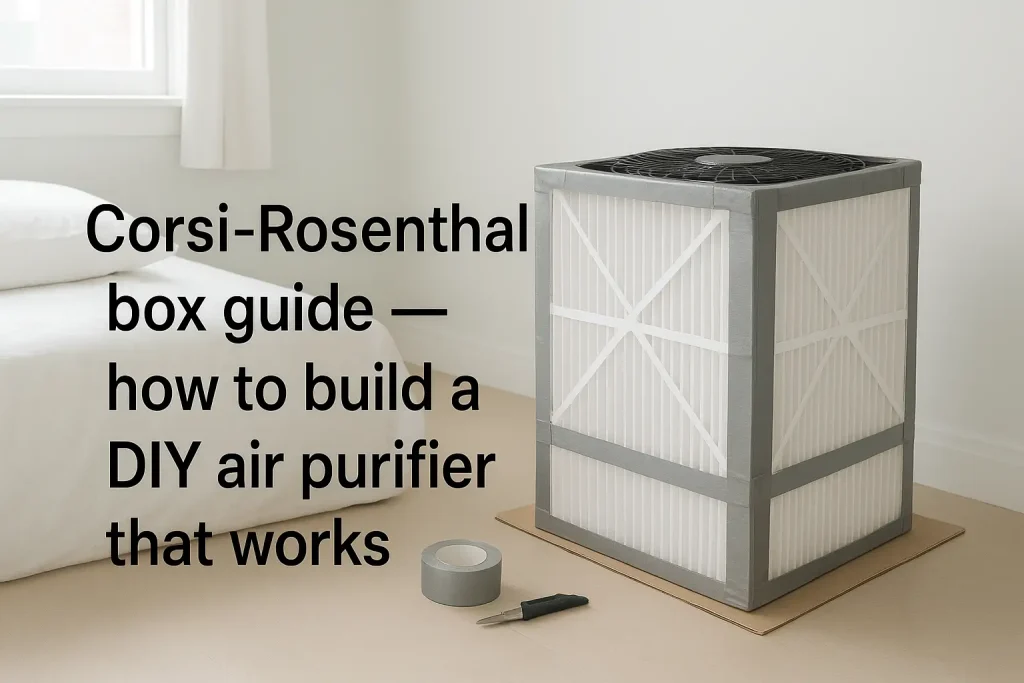
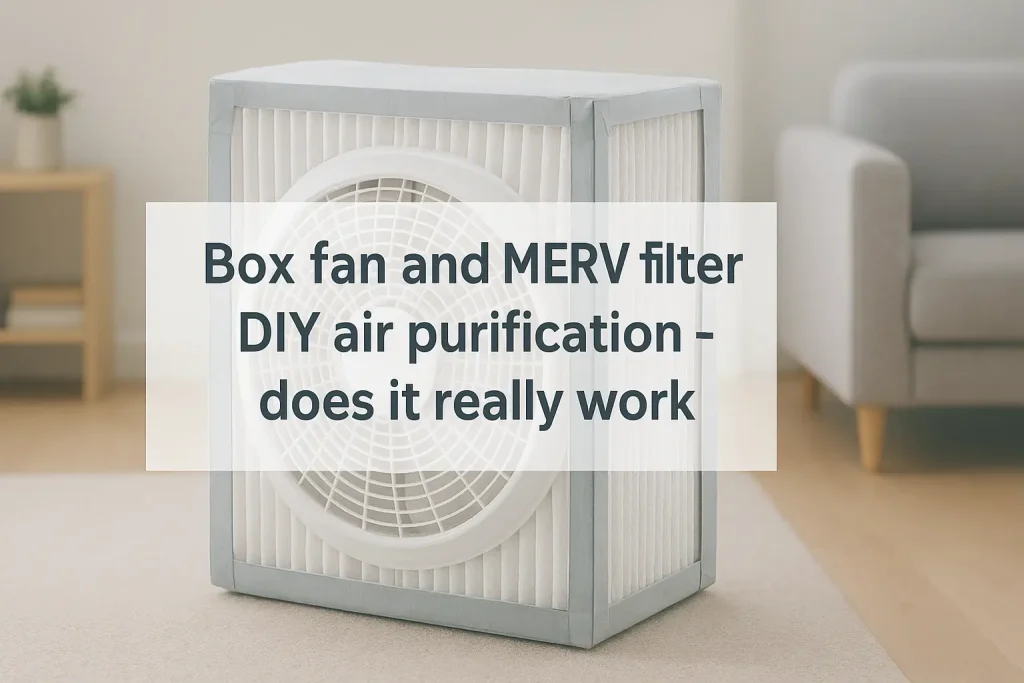
If you open a sealed combination filter to add carbon, you destroy the filter’s structural integrity and likely create air bypass channels that allow unfiltered air to reach the outlet. The filter housing, gaskets, and seals are manufactured as a single assembly and cannot be reassembled to original specifications after disassembly. A DIY air purifier built with a box fan and filters offers more carbon customization at lower cost than attempting to modify a sealed commercial unit.
For readers who need more carbon capacity than their current purifier provides, the correct solution is to purchase a unit designed with adequate carbon weight for your VOC load or to supplement with a standalone carbon canister filter designed for grow-room or commercial air scrubbing applications. These standalone carbon filters connect to inline duct fans and provide 20-50 lbs of carbon in a refillable canister format at a fraction of the cost per pound of consumer air purifier carbon filters.
Does the Type of Carbon Source Material (Coconut, Coal, Wood) Matter for Air Purification?
The carbon source material affects pore size distribution, which determines which pollutants are captured most efficiently. Coconut-shell carbon produces a high proportion of micropores (under 2 nm) ideal for small-molecule VOCs like benzene, toluene, and xylene. Coal-based carbon produces a broader pore distribution with more mesopores (2-50 nm) that capture larger organic molecules effectively. Wood-based carbon typically produces the widest pore distribution with significant macropore volume.
For general residential VOC and odor removal, coconut-shell activated carbon is the preferred material and the most common in consumer air purifiers. It provides the highest micropore volume per gram, which maximizes adsorption capacity for the VOC molecular weight range most commonly found indoors (30-200 g/mol). Most premium carbon air purifiers including IQAir, Austin Air, and Alen use coconut-shell-based carbon.
The practical difference between carbon sources is noticeable primarily at the extremes: very small molecules like formaldehyde (where even coconut carbon struggles) and very large odor molecules from cooking or smoke (where coal carbon’s mesopores provide better access). For the broad middle range of indoor VOCs, coconut carbon performs best per gram, and the carbon weight matters far more than the source material.
Is Activated Carbon from an Air Purifier Safe to Breathe Around Continuously?
Activated carbon in a properly designed air purifier is safe to breathe around continuously because the carbon granules are contained within a filter housing and do not release particles into the airstream. The carbon is physically stable at room temperature and does not off-gas. Any carbon dust generated during manufacturing is trapped within the filter media and does not escape during normal operation.
The only safety concern with activated carbon filters is the potential for bacterial or mold growth on the carbon surface if the filter becomes wet and remains damp in a humid environment for extended periods. Carbon’s high surface area can support microbial colonization if water is present. This is why carbon filters in basements or humid climates should be paired with dehumidification, and filters should never be washed or exposed to liquid water.
If you smell a musty or sour odor from your carbon filter that is different from the usual saturated-carbon smell, bacterial growth on the filter surface is a possibility. Replace the filter immediately and address the humidity condition that allowed moisture to accumulate. A carbon filter operating in a dry environment with regular replacement poses no respiratory health risk.
Can Activated Carbon Filters Remove Viruses and Bacteria from the Air?
Activated carbon filters do not remove viruses or bacteria from the air because these are particulate biological agents, not gas molecules. Viruses range from 0.02 to 0.3 microns. Bacteria range from 0.3 to 5 microns. Activated carbon captures molecules typically under 0.001 microns (1 nanometer) through adsorption. It has no mechanical filtration mechanism for particles in the virus and bacteria size range.
A carbon filter may incidentally capture a tiny fraction of airborne pathogens if they happen to impact a carbon granule surface, but this is not a designed or reliable capture mechanism. The capture efficiency is far below even a MERV 8 filter, let alone MERV 13 or True HEPA. If pathogen removal is a concern, you need True HEPA filtration with adequate CADR for your room. Carbon only addresses the gas-phase component of indoor air quality.
Some air purifiers combine UV-C lamps with carbon filters, claiming the UV light sterilizes pathogens trapped in the carbon. This claim is problematic because UV-C requires direct line-of-sight exposure with adequate intensity and dwell time to inactivate microorganisms. Pathogens trapped deep within carbon pores receive zero UV exposure. For UV air purification efficacy data, our analysis of whether whole-house UV air purifier systems actually work covers the evidence on pathogen inactivation by UV-C in HVAC and portable applications.
Why Does My Air Purifier Carbon Filter Smell Like Chemicals When It Is New?
A new carbon filter may emit a faint chemical or plastic-like odor during the first 24-48 hours of operation. This is off-gassing from the filter housing materials, adhesives, and packaging, not from the carbon itself. Activated carbon is odorless in its fresh state. The smell originates from volatile compounds in the plastic frame, glue, or foam gaskets that hold the carbon filter assembly together.
This happens because manufacturing processes for filter assemblies involve adhesives and plastic components that retain residual solvents and monomers. When the purifier first runs, warm air passing through these materials accelerates off-gassing. The carbon stage captures some of these emissions, but the initial burst can be noticeable in the outlet airstream.
If the off-gassing odor persists beyond 72 hours of continuous operation, the filter assembly may be defective or the purifier’s internal components may be off-gassing at an unusually high rate. Return the filter for a replacement. Most new-filter odors dissipate completely within 2-3 days of continuous use. Running the purifier on high fan speed in an unoccupied room for the first day accelerates the off-gassing period.
What Happens if I Run an Air Purifier Without the Carbon Filter Installed?
Running an air purifier without the carbon filter installed is safe for the device and continues to provide full HEPA particle filtration. The purifier will operate with slightly higher airflow because the carbon stage is removed from the air path, reducing pressure drop. You lose all gas-phase filtration: odors, VOCs, and chemical fumes pass through completely unadsorbed.
In purifiers where the carbon filter serves as a pre-filter for the HEPA stage, removing the carbon means the HEPA will load with larger particles more quickly. This shortens HEPA life because the carbon pre-filter is no longer catching coarse dust and lint before they reach the HEPA. The HEPA replacement interval may decrease by 20-30% without the pre-filter protection.
If your carbon filter is saturated and you are waiting for a replacement to arrive, running the purifier without the carbon stage is preferable to running it with a desorbing saturated filter that releases VOCs back into the room. Remove the spent carbon, run HEPA-only for particle filtration, and install the new carbon filter when it arrives. The temporary loss of odor control is better than active VOC recirculation from a saturated carbon bed.
Do Beeswax Candles or Plants Provide the Same VOC Removal as Activated Carbon?
Beeswax candles and indoor plants provide negligible VOC removal compared to activated carbon filtration. The VOC removal rates documented for potted plants in chamber studies are typically 0.1-1% of the removal rate of a small activated carbon filter. A 2019 review in the Journal of Exposure Science and Environmental Epidemiology calculated that you would need 10-1,000 plants per square meter to achieve VOC removal rates comparable to building ventilation alone.
This happens because plants metabolize VOCs through leaf stomata and root-zone microorganisms at rates measured in micrograms per hour per plant. An activated carbon filter with 5 lbs of carbon removes VOCs at rates measured in grams per hour. The scale difference is roughly 1,000 to 10,000-fold. Plants are biologically interesting air quality research subjects. They are not practical air purification devices for occupied indoor spaces.
For readers curious about natural air purification claims, our evidence review on whether beeswax candles actually purify air covers the experimental data on natural VOC reduction methods. The conclusion from the evidence is consistent: activated carbon filtration is the only consumer technology with documented, meaningful gas-phase pollutant removal at air change rates relevant to indoor air quality improvement.
Activated carbon filtration is the only consumer technology that removes the chemicals you cannot see from the air you breathe every day. Carbon weight determines what a filter can do. Carbon type determines which pollutants it targets. Contact time determines whether those pollutants actually get captured or just pass through.
A thin carbon sheet in a $100 purifier provides basic odor control for a small room with low VOC levels. A 15-pound granular carbon bed in an Austin Air HealthMate or IQAir unit provides genuine VOC removal across a broad spectrum of chemicals. The difference is not marketing. It is physics: more adsorption sites capture more pollutants for longer before saturation.
If you have real VOC concerns—new furniture, an attached garage, renovation chemicals, persistent odors—buy a purifier with a published carbon weight of at least 5 pounds and replace the carbon stage every 3-6 months. If your concerns are light and occasional, a mid-range purifier with 1-3 pounds of carbon handles typical household odors effectively. For formaldehyde specifically, standard carbon will not work regardless of weight. You need impregnated carbon or dedicated chemisorption media, and those filters come at a premium price for a reason.
Check your current purifier’s carbon specification now. If the manufacturer does not publish a carbon weight in pounds or grams, assume it is a thin sheet under 1 pound and plan your VOC strategy accordingly—either with a supplemental carbon canister, increased ventilation during high-VOC activities, or an upgrade to a unit designed for genuine gas-phase filtration.