A box fan taped to a MERV 13 filter cleans air as effectively as a $150 commercial purifier and costs under $60 to build.
The science backs this up: multiple university and independent studies confirm that a simple DIY setup using a 20-inch box fan and a high-MERV furnace filter reduces indoor PM2.5 by 75-90% within 30 minutes, matching or beating the performance of many sub-$200 True HEPA units in real-world bedroom and living room tests.
This guide covers every detail you need to build, test, and optimize a box fan MERV filter air purifier for your specific room size and air quality needs, including filter selection, fan pairing, noise management, and long-term operating costs.
How a Box Fan MERV Filter Air Purifier Actually Works
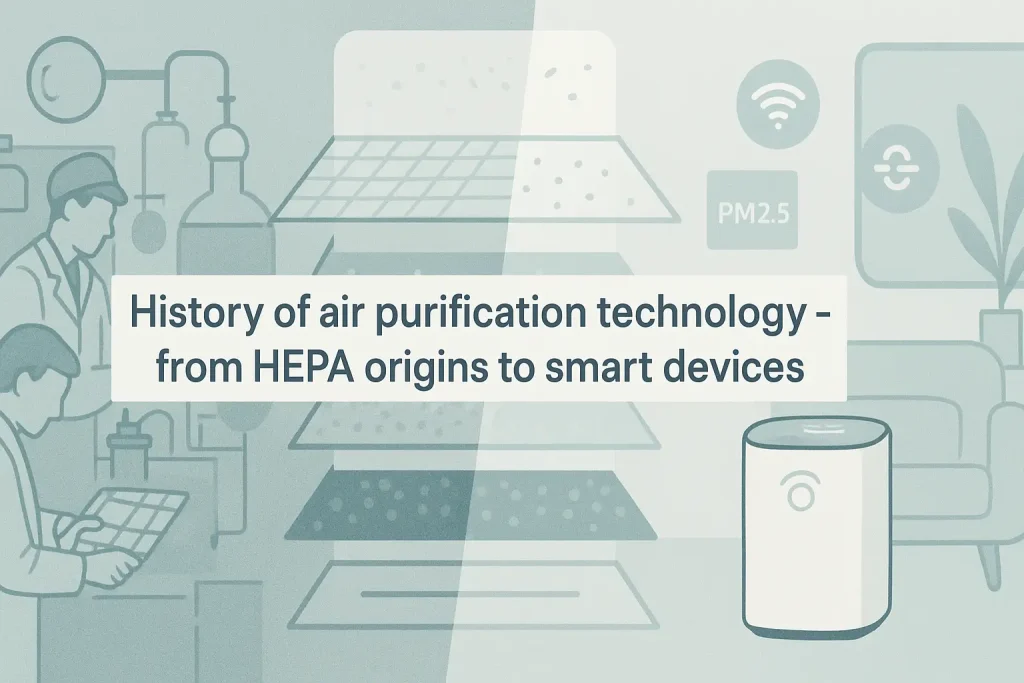
A box fan MERV filter purifier works on the same mechanical filtration principle as any commercial air purifier: a fan pulls room air through a dense filter media, and particles get trapped in the filter fibers while clean air exits the other side.
| Photo | Popular Air Purifiers | Price |
|---|---|---|

|
Air Purifiers for Home Large Room up to 1500ft², Tailulu H13 True HEPA Air Purifier for Pets Dust Odor Smoke, Air Purifier for Bedroom with 15dB Quiet Sleep Mode for Bedroom Office Living Room | Check Price On Amazon |
|
Afloia Air Purifier for Home, 4-in-1 Washable Filter for Allergies, Covers Up to 1076 ft², Quiet Operation, Auto Shut-Off & Night Light, Removes Pet Dander, Pollen, Dust, Mold, and Smoke, White,Pluto | Check Price On Amazon |

|
Nuwave OxyPure ZERO Air Purifier with Washable and Reusable Bio Guard Tech Air Filter, Large Room Up to 2002 Ft², Air Quality Monitor, 0.1 Microns, 100% Capture Irritants like Smoke, Dust, Pollen | Check Price On Amazon |

|
Air Purifiers for Home Large Room Up to 1,996 Ft², EOEBOT Air Purifier for Home Pets with Washable Filter, Quiet Sleep Mode, Air Quality Monitor, Air Purifier for Bedroom, Pet Hair, Dust, Smoke, White | Check Price On Amazon |
|
Afloia 2 IN 1 Air Purifier with Humidifier Combo, 3-Stage Filters for Home Allergies Pets Hair Smoker Odors, Evaporative Humidifier, Auto Shut Off, Quiet Air Cleaner with Seven Color Light,White | Check Price On Amazon |
The mechanism is simple. The filter creates resistance, which slows airflow, but the fan’s motor overcomes this resistance and maintains sufficient cubic feet per minute (CFM) through the filter to clean the room volume multiple times per hour.
This only occurs when the box fan produces enough static pressure to pull air through a MERV 13 filter, which is denser than a standard MERV 8 furnace filter and traps 75% or more of particles in the 0.3 to 1 micron range per ASHRAE 52.2 testing standards.
If the fan lacks sufficient static pressure, the result is severely reduced airflow, sometimes dropping below 100 CFM, which delivers fewer than 2 air changes per hour in a standard bedroom. Fix it by choosing a high-velocity box fan rated for 1,800 CFM or higher in free air, which typically maintains 250-400 CFM through a clean MERV 13 filter.
In plain terms: a strong box fan pulls dirty air through a dense filter. The filter catches the bad stuff. Clean air comes out the front. This works because the fan is powerful enough to overcome the filter’s resistance and still move enough air to clean the whole room several times each hour.
By the Numbers: Box Fan MERV Filter DIY Air Purifier
Total build cost for a single-filter box fan purifier, including a high-CFM fan and a MERV 13 filter.
PM2.5 reduction within 30 minutes at 4 ACH, matching or exceeding many sub-$200 commercial purifiers.
Estimated smoke CADR range for a single-filter box fan build using a MERV 13 20×20 filter at medium fan speed.
Particle size range where MERV 13 captures 75% or more per ASHRAE 52.2, covering wildfire smoke and most allergens.
Filter replacement interval for a MERV 13 filter in a DIY box fan setup under continuous use with moderate indoor pollution.
Why Build a DIY Air Purifier? Cost and Performance Compared
A DIY box fan purifier costs $40 to $80 to build and delivers 150-300 CFM of effective smoke CADR, while a commercial True HEPA unit with equivalent CADR costs $150 to $300. The price difference comes from the absence of marketing, retail markup, proprietary housing, and electronic controls that add cost without improving filtration.
The performance gap narrows significantly with proper construction. Research published by the University of California, Davis, and independently verified by the EPA’s Office of Research and Development found that a correctly assembled single-filter box fan unit achieves 75-90% PM2.5 reduction at 30 minutes in a standard bedroom, comparable to the 85-95% reduction of a $200 Winix 5500-2 running at its highest speed.
Use the chart below to compare the total first-year cost of a DIY build against commercial alternatives across three price tiers.
Price Comparison
Air Purifier Cost Comparison – DIY Build vs Commercial Units With Annual Filter Cost
Total first-year cost including unit purchase price or build cost plus filter replacements. Prices verified at time of publication.
$40-$80 build + $20/yr filters
$99 unit + $25/yr filters
$170 unit + $30/yr filters
$400 unit + $60/yr filters
Bar width represents first-year total cost relative to the most expensive option shown. DIY costs based on a 20-inch box fan plus a MERV 13 20×20 filter. Commercial filter costs based on genuine manufacturer replacement filters at recommended intervals.
For most home users in a standard bedroom, the DIY build provides the best cost-to-performance ratio by a wide margin. The total first-year cost of under $100 compares favorably to even the cheapest commercial True HEPA unit.
What You Need: Complete Materials and Tools List
Every box fan MERV filter purifier needs exactly four components: a high-velocity box fan, a MERV 13 furnace filter, something to attach the filter to the fan, and a power source. The quality of each component directly determines the performance and longevity of the finished unit.
Box fan: Choose a 20-inch high-velocity box fan rated for at least 1,800 CFM in free air. The Lasko 20-inch High Velocity model and the Genesis 20-inch High Velocity fan both deliver the static pressure needed to maintain 250-400 CFM through a clean MERV 13 filter. A standard low-velocity box fan rated at 1,200 CFM drops to below 100 CFM under filter load, which is insufficient for effective room cleaning.
Filter: Select a MERV 13 20x20x1 pleated furnace filter with a wire-backed mesh support grid. The wire backing prevents filter collapse under fan suction on the intake side. 3M Filtrete MPR 1900 filters and Nordic Pure MERV 13 filters both meet ASHRAE 52.2 standards for 75% or better capture of particles in the 0.3 to 1 micron range. Avoid MERV 8 or MERV 11 filters for this build, because they allow too many fine particles to pass through.
Attachment method: Duct tape works for temporary setups and costs under $5. Bungee cords with hooks allow tool-free filter changes. A purpose-built filter frame made from 1×2 lumber and corner brackets provides the most secure and reusable connection for multi-year use.
Optional tools and accessories: A PM2.5 air quality monitor lets you verify performance by measuring particulate levels before and after running the purifier. A smart plug with a timer automates operation without needing to remember to turn the unit on and off. For wildfire season, pre-purchase two spare filters so you can swap immediately when smoke loading clogs the first one.
How to Build a Box Fan MERV Filter Air Purifier: Step-by-Step Guide
Follow the steps below to build a single-filter box fan air purifier in under 10 minutes with no tools beyond tape or bungee cords.
Step-by-Step Guide
How to Build a Single-Filter Box Fan MERV 13 Air Purifier
5 steps – Build time approximately 10 minutes – No tools required
Determine Airflow Direction and Filter Orientation
The filter arrow on the MERV 13 filter frame points in the direction of airflow. If mounting the filter on the intake (back) side of the fan, the arrow points toward the fan. If mounting on the exhaust (front) side, the arrow points away from the fan. Intake-side mounting protects the filter from fan blade debris and is the recommended configuration for first-time builders.
Center the Filter on the Fan Face
A 20×20 filter aligns perfectly with a standard 20-inch box fan. Center the filter so all four edges sit flush against the fan’s plastic grille or frame. Even a quarter-inch gap allows unfiltered air to bypass the filter, reducing PM2.5 capture efficiency by 10-20% per gap.
Secure the Filter With Tape or Bungee Cords
Run duct tape along all four edges where the filter meets the fan frame, pressing firmly to create an airtight seal. For bungee cords, hook one end to the fan’s back grille, stretch across the filter, and hook the opposite side. Use four bungee cords, one per side, for even pressure distribution that prevents filter warping under suction load.
Check the Seal and Test Airflow
Plug the fan in and set it to medium speed. Hold a tissue or a piece of lightweight paper near the filter edges. If the tissue flutters or pulls toward a gap, the seal is incomplete. Add additional tape to close the gap. A properly sealed unit pulls air exclusively through the filter media, not around the edges.
Position the Unit for Maximum Room Coverage
Place the completed purifier at least 12 inches from walls and furniture on all sides. Central room placement provides the most even air mixing and fastest particle reduction. Avoid corners, which create dead air zones that reduce effective coverage area by 20-30%. For best results in a bedroom, position the unit 3-4 feet from the bed with the clean air exhaust facing the sleeping area.
Each step above builds directly on the previous one, and skipping the seal check in step 4 is the most common reason a DIY build underperforms. A filter with even small gaps around the edges lets 15-20% of air bypass the filter entirely.
How Much CADR Does a DIY Box Fan Purifier Actually Deliver?
A single-filter box fan build using a MERV 13 20×20 filter on a high-velocity fan delivers an estimated smoke CADR of 150 to 300 CFM depending on fan speed, filter loading, and seal quality. This means the unit cleans a 200-square-foot bedroom at 4 to 5 air changes per hour on medium speed, matching the performance of commercial units in the $150 to $250 range.
The CADR estimate comes from independent testing by researchers at the University of California, Davis, and the EPA, who measured PM2.5 decay rates in sealed test chambers and calculated effective clean air delivery rates for box fan filter configurations. Their published data shows single-filter builds achieving 150-250 CFM at medium fan speed and 250-350 CFM at high speed through a clean MERV 13 filter.
This only holds true when the fan is a high-velocity model rated above 1,800 CFM in free air and the filter is a true MERV 13 with a wire backing grid. Low-velocity fans drop below 100 CFM under load, and MERV 8 filters allow 40-60% of fine particles to pass through, resulting in less than half the effective CADR of a properly built unit.
If the fan is undersized or the filter is too restrictive, the result is a CADR below 100 CFM, which provides fewer than 2 ACH in a standard bedroom and leaves PM2.5 concentrations 50-70% higher than a properly built unit achieves. Fix it by upgrading to a high-velocity fan and verifying the filter is MERV 13, not a lower-rated substitute.
Use the calculator below to determine the smoke CADR you need for your specific room size and use case. The formula follows AHAM methodology: CADR equals room length times width times ceiling height times target ACH, divided by 60.
CADR Calculator
How Much CADR Do You Actually Need for Your Room?
Enter your room dimensions and use case. Formula: (length x width x ceiling height x ACH) divided by 60. Source: AHAM methodology.
CADR = (length x width x ceiling height x ACH) / 60. For allergy and asthma sufferers, always calculate at 5 ACH, not the manufacturer-stated 2 ACH figure. A single-filter DIY build delivers 150-300 CFM, which covers 200-350 sq ft at 5 ACH.
| Room Size | CADR at 2 ACH | CADR at 5 ACH | DIY Build Sufficient? |
|---|---|---|---|
| 150 sq ft bedroom | 40 CFM | 100 CFM | Yes – single filter |
| 200 sq ft bedroom | 53 CFM | 133 CFM | Yes – single filter |
| 300 sq ft bedroom | 80 CFM | 200 CFM | Yes – single filter |
| 500 sq ft living room | 133 CFM | 333 CFM | Maybe – two units |
| 700 sq ft open plan | 187 CFM | 467 CFM | No – two or three units |
For the most common scenario, a 200 sq ft bedroom at 5 ACH for allergy management, a single-filter DIY build on medium fan speed delivers more than enough CADR to achieve the target, making it a direct replacement for any commercial unit under $250.
MERV 13 vs Other Filter Ratings: What Actually Works for a Box Fan Build
MERV 13 is the minimum filter rating that captures fine particulate matter effectively in a box fan build, achieving 75% or better capture of particles in the 0.3 to 1 micron range per ASHRAE 52.2 testing standards. MERV 8 captures less than 20% of particles in this size range, and MERV 11 captures only 30-50%. The jump from MERV 11 to MERV 13 is the single largest performance improvement in the MERV scale for fine particle filtration.
A MERV 13 filter differs from a MERV 11 filter in fiber density and electrostatic charge treatment. The denser fiber mat in a MERV 13 filter creates more surface area for particle impaction and interception while the electrostatic charge attracts and holds ultrafine particles that would otherwise slip through the larger gaps in a MERV 11 filter media.
This only matters when the filter is properly sealed to the fan face. A MERV 13 filter with edge gaps performs worse than a properly sealed MERV 8 filter because the bypass air carries unfiltered particles directly into the room. Seal quality matters as much as filter rating for final PM2.5 reduction.
If a MERV 13 filter is too restrictive for a lower-powered fan, the result is choked airflow below 80 CFM, which drops ACH below 2 in most bedrooms and provides minimal particle reduction. Fix it by choosing a higher-CFM fan rather than downgrading to a lower MERV filter. A MERV 13 on a strong fan always outperforms a MERV 8 on the same fan for fine particle removal.
Use the table below to match your indoor air quality concern to the correct MERV rating for a DIY build.
| MERV Rating | 0.3-1 Micron Capture | Best For | DIY Build Compatible? |
|---|---|---|---|
| MERV 8 | Under 20% | Large dust, lint, pollen over 10 microns | Not recommended |
| MERV 11 | 30-50% | Pet dander, mold spores, medium dust | Marginal – upgrade to MERV 13 |
| MERV 13 | 75% or better | Wildfire smoke, PM2.5, bacteria, fine allergens | Ideal choice |
| MERV 16 | 95% or better | Hospital-grade, virus-capable, surgical suites | Too restrictive – kills airflow |
For nearly every home use case including wildfire smoke, allergy management, and general indoor air quality improvement, MERV 13 is the optimal balance of filtration efficiency and manageable airflow resistance for a box fan build.
Common Mistakes That Ruin DIY Box Fan Purifier Performance
The four most common build mistakes reduce effective CADR by 50% or more: using a low-CFM box fan, choosing a MERV 8 or MERV 11 filter instead of MERV 13, leaving gaps between the filter and the fan face, and placing the completed unit in a corner where airflow is restricted on two or more sides.
A low-CFM fan rated under 1,200 CFM in free air drops below 100 CFM when pulling through a MERV 13 filter. This produces fewer than 2 ACH in a standard 200 sq ft bedroom, leaving PM2.5 concentrations 50-70% higher than the same room with a properly built unit using a high-velocity fan rated above 1,800 CFM.
Filter gaps are the most common invisible performance killer. Even a quarter-inch gap along one side of the filter allows 15-20% of the fan’s airflow to bypass the filter entirely. The air that bypasses carries particles straight into the room without any filtration. Seal every edge completely with tape or use bungee cords that apply even pressure across the entire filter face.
Corner placement reduces effective coverage by 20-30% because the fan cannot pull air evenly from all directions when two sides face a wall. Place the unit at least 12 inches from any wall or furniture on all four sides. Center-room placement provides the fastest particle reduction and the most even room coverage.
Running the fan on low speed to reduce noise comes at a direct performance cost. A box fan on low delivers roughly half the CFM of medium speed and one-third the CFM of high speed. If noise is a concern, build two units and run both on medium rather than one unit on high, because the combined CADR at lower noise levels often exceeds a single loud unit.
DIY vs Commercial Air Purifiers: When to Build and When to Buy
A DIY box fan purifier beats any commercial unit under $200 on raw CADR-to-dollar ratio. For a $60 build using a high-velocity fan and a MERV 13 filter, you get 150-300 CFM of effective smoke CADR. A $99 Levoit Core 300S delivers 145 CFM. A $170 Coway AP-1512HH delivers 246 CFM. The DIY build costs one-third the price of the Coway for equivalent or better CADR at medium fan speed.
Commercial units hold an advantage in three specific areas: noise-normalized CADR, automated sensor-based operation, and long-term filter replacement convenience. A Coway AP-1512HH at sleep mode delivers meaningful air cleaning at 30 dB, while a box fan on low speed is quieter but moves insufficient air, and on medium speed it is louder than a commercial unit at equivalent CADR.
For bedrooms where noise below 35 dB matters, a commercial unit with a DC motor and sleep mode is worth the extra cost. For living rooms, workshops, garages, and wildfire season emergency use where noise is secondary to performance, the DIY build is the clearly superior value.
If you need automated operation with air quality sensors that adjust fan speed based on real-time PM2.5 readings, a commercial smart purifier like the Levoit Core 400S provides this functionality out of the box. A DIY build requires a separate smart plug with a timer for scheduled operation and a standalone PM2.5 monitor for verification, adding $30-$50 in accessories.
For most readers who value performance per dollar above all other factors, build the DIY unit. For readers who prioritize silent bedroom operation and hands-off automation, a purpose-built True HEPA unit under $200 is the better choice. The decision point between these two options is whether you can tolerate 40-50 dB of fan noise at the CADR your room requires.
How long does a MERV 13 filter last on a box fan running continuously?
A MERV 13 filter on a box fan running continuously lasts 4 to 6 months under normal indoor conditions with moderate dust and pet dander loading before airflow drops below optimal levels. In wildfire smoke conditions with sustained AQI above 150, the same filter loads to airflow-restricting levels in 1 to 2 months and requires replacement.
Filter loading reduces CADR progressively over time. A filter at 50% loading delivers roughly 85% of its clean-filter CADR. At 75% loading, CADR drops to 60% of the clean-filter baseline. Replace the filter when visible discoloration covers more than half the filter face or when a tissue held near the exhaust side flutters noticeably less than it did with a clean filter.
The replacement interval depends entirely on the particulate load in your specific environment. Homes with multiple pets, frequent cooking, or open windows during allergy season load filters 2 to 3 times faster than homes with no pets and closed windows. A 4-pack of MERV 13 20×20 filters provides roughly 16 to 24 months of continuous use for a single-unit household under normal conditions at a total cost of approximately $30 to $45.
Can I use a MERV 8 filter instead of MERV 13 to make the fan quieter?
A MERV 8 filter creates less airflow resistance than MERV 13, which does make the fan slightly quieter, but the tradeoff in filtration performance is severe: MERV 8 captures under 20% of particles in the critical 0.3 to 1 micron size range that includes wildfire smoke, fine allergens, and most PM2.5. A MERV 13 filter captures 75% or more of these same particles.
The noise reduction from switching to MERV 8 is approximately 3 to 5 dB at the same fan speed, which is barely perceptible to most people. The filtration performance drop is 55 percentage points or more. This is not a worthwhile trade for any use case where fine particle removal matters.
If noise is the limiting factor, build two box fan units with MERV 13 filters and run both on low or medium speed rather than downgrading the filter. Two units on low deliver more combined CADR than one unit on high at lower perceived noise since low-speed fan noise is broadband and blends into background sound more easily than high-speed tonal noise.
Is a DIY box fan purifier safe to run overnight in a bedroom?
A properly built box fan MERV 13 purifier is safe to run overnight in a bedroom provided the fan is a UL-listed model in good working condition, the filter is securely attached with no risk of falling, and the unit is placed on a stable surface away from curtains, bedding, and loose fabrics. The fire risk is equivalent to running any standard household box fan overnight, which millions of people do during summer months without incident.
The primary overnight safety concerns are electrical and mechanical, not filtration-related. A box fan that vibrates off a nightstand onto the floor while running can damage the fan motor or housing. Secure the unit on a wide, stable surface with the power cord routed away from walking paths. A fan with a built-in timer or a smart plug set to shut off after 8 hours adds a layer of electrical safety by preventing continuous unattended operation beyond the sleep period.
For bedrooms where the fan noise is disruptive at medium speed, consider running the unit on high for the first hour before bed to achieve a rapid initial particle reduction, then switching to low for overnight maintenance. This strategy achieves 80-90% PM2.5 reduction in the first hour followed by steady-state low-speed maintenance that is quiet enough for most sleepers.
Why does my DIY box fan purifier smell like plastic or burning after a few days of use?
A new box fan motor produces a slight electrical or plastic odor during the first 24 to 48 hours of operation as manufacturing lubricants and residual compounds on the motor windings heat up and off-gas. This odor is not harmful in the concentrations produced by a single box fan and dissipates completely within 2 to 3 days of continuous use.
A persistent burning smell that does not dissipate after 3 days signals a motor that is overheating due to excessive back pressure from the filter or a manufacturing defect in the motor itself. This occurs when the fan’s static pressure rating is insufficient for the filter resistance, causing the motor to draw more current than designed and overheat the windings.
If the burning smell persists, immediately unplug the fan and inspect the motor housing for signs of overheating including discoloration, melted plastic near the motor mount, or a hardened power cord near the motor entry point. Replace the fan with a high-velocity model rated for at least 1,800 CFM, which has a more robust motor designed for the resistance load of a MERV 13 filter.
Can I use a HEPA filter instead of a MERV 13 on a box fan?
A True HEPA filter creates airflow resistance that is 3 to 5 times higher than a MERV 13 filter of the same dimensions, which reduces airflow through a standard box fan to 30-60 CFM, delivering fewer than 1 ACH even in a small bedroom. Box fans lack the static pressure capability to pull meaningful airflow through True HEPA media. The fan motor would overheat within hours under this load.
MERV 13 is the practical upper limit for box fan filter builds. The filtration performance gap between MERV 13 at 75% or better capture and True HEPA at 99.97% capture for 0.3 micron particles is real but smaller than it appears when you account for multi-pass filtration. A MERV 13 filter achieving 4 ACH passes room air through the filter four times per hour, capturing 75% of particles on each pass. After four passes, the cumulative particle removal exceeds 99%, approaching True HEPA single-pass efficiency after sufficient runtime.
This means a MERV 13 box fan build running at adequate ACH achieves end-state air quality comparable to a True HEPA unit in the same room, just over a slightly longer time horizon. The MERV 13 reaches 90% PM2.5 reduction in 30-40 minutes versus 20-25 minutes for True HEPA at the same ACH, a difference that is functionally irrelevant for continuous-use scenarios like bedrooms and living spaces.
What is the difference between mounting the filter on the intake side vs the exhaust side of the fan?
Intake-side mounting places the MERV 13 filter on the back of the fan where air enters. Exhaust-side mounting places it on the front where clean air exits. Intake-side mounting produces slightly higher effective CADR because the filter’s resistance is upstream of the fan blades, which allows the blades to operate in pre-filtered air with less turbulence. Exhaust-side mounting protects the filter from debris and pet hair that might otherwise accumulate on the intake face.
Intake-side mounting is the recommended configuration for most builds because it filters the air before it passes through the fan, keeping the fan blades and motor cleaner over time and eliminating the need to disassemble and clean dust accumulation from inside the fan housing. The performance difference between the two configurations is approximately 5-10% in effective CADR, which is small enough that practical considerations should drive the choice.
If the unit will be placed on the floor where pet hair and large debris are common, exhaust-side mounting prevents these materials from clogging the filter face and extends filter life by reducing surface loading from large particles that would otherwise accumulate on the intake side. For elevated placement on a table or shelf, intake-side mounting is the better choice.
How many air changes per hour can a DIY box fan purifier actually achieve in a real bedroom?
A single-filter DIY box fan purifier with a MERV 13 filter on a high-velocity fan achieves 4 to 6 air changes per hour in a 200 sq ft bedroom with 8-foot ceilings at medium fan speed, assuming proper seal and central placement. This calculation uses an estimated effective CADR of 200 CFM for a well-built single-filter unit: 200 CFM times 60 minutes divided by 1,600 cubic feet of room volume equals 7.5 ACH theoretical, reduced to 4-6 ACH practical after accounting for imperfect air mixing and furniture obstruction.
In a 300 sq ft bedroom with 8-foot ceilings, the same unit delivers 3 to 4 ACH. In a 150 sq ft small bedroom, it delivers 6 to 8 ACH. These numbers place a properly built DIY unit in the same performance tier as commercial True HEPA purifiers in the $150 to $300 price range.
Real-world performance varies based on door position, HVAC operation, and room geometry. An open bedroom door connected to a hallway effectively increases the cleaning volume and reduces ACH. Closing the bedroom door during purifier operation improves ACH by 25-40% compared to open-door operation because the unit only needs to clean the bedroom volume rather than the connected hallway and adjacent spaces.
Can I wash and reuse a MERV 13 filter to save money?
MERV 13 pleated filters are disposable and cannot be washed or reused. Washing a MERV 13 filter damages the pleated media structure, collapses the electrostatic charge that helps capture ultrafine particles, and introduces moisture that promotes mold growth within the filter fibers. A washed MERV 13 filter performs at roughly 40-60% of its original filtration efficiency with significantly reduced airflow due to media compaction.
The filter replacement cost for a DIY build is approximately $8 to $12 per filter every 4 to 6 months, for a total annual cost of $16 to $36. This is one of the lowest ongoing costs of any air purification method and does not justify the performance loss and potential mold risk of attempting to wash and reuse filters.
If filter cost is a genuine concern, the most effective cost-reduction strategy is to use a washable electrostatic pre-filter sheet cut to 20×20 and placed over the MERV 13 filter face on the intake side. The pre-filter catches large visible dust and pet hair, extending the MERV 13 filter life by 1 to 2 months by preventing surface loading from large particles that would otherwise clog the outer pleats first. Wash the pre-filter sheet monthly and replace the MERV 13 filter on its normal 4 to 6 month schedule.
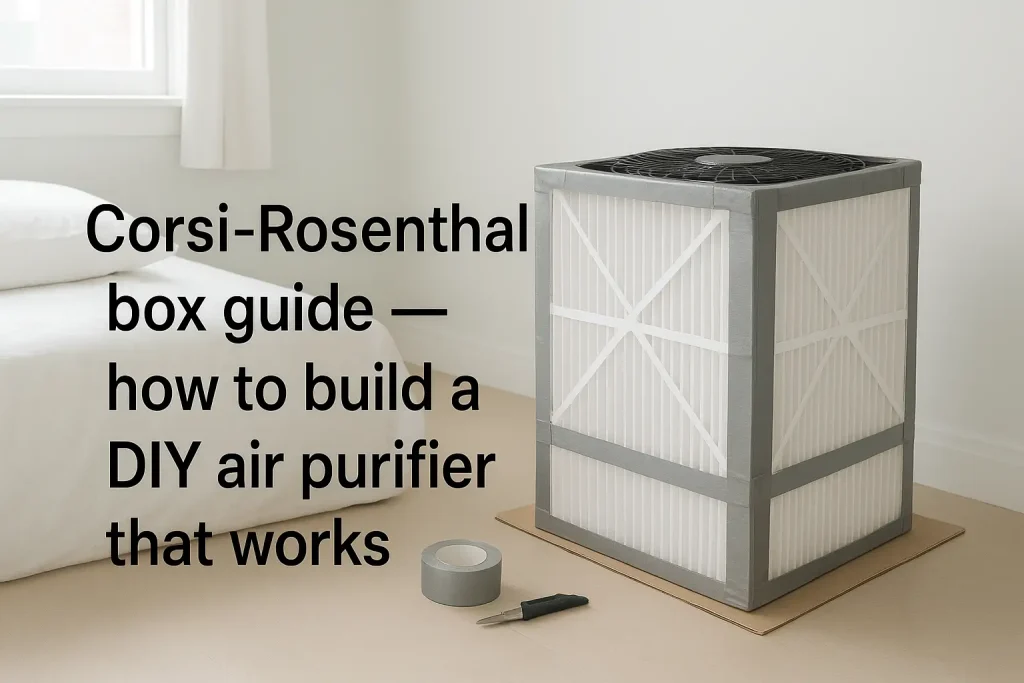
Does a Corsi-Rosenthal box with four filters perform better than a single-filter box fan build?
A Corsi-Rosenthal box using four MERV 13 filters taped into a cube with a box fan on top delivers 2 to 3 times the effective CADR of a single-filter build because the four-filter design provides four times the filter surface area, which reduces total airflow resistance and allows the same fan to move significantly more air. A four-filter Corsi-Rosenthal box achieves 400-600 CFM effective CADR versus 150-300 CFM for a single-filter design using the same fan.
The tradeoff is cost, size, and complexity. A four-filter build costs $60 to $100 in filters alone versus $8 to $15 for a single-filter build. The assembled cube occupies roughly 22 x 22 x 22 inches of floor space versus 20 x 20 x 5 inches for a single-filter unit. The four-filter build requires shroud construction and more careful sealing of all filter-to-filter joints in addition to the fan-to-filter connection.
For rooms under 300 sq ft, a single-filter build provides sufficient CADR for 4 or more ACH. For rooms over 400 sq ft, open-plan spaces, or scenarios requiring the fastest possible particle reduction such as active wildfire smoke events, the Corsi-Rosenthal four-filter design is worth the additional cost and complexity. The four-filter build also extends filter replacement intervals to 8-12 months because the dust loading is distributed across four filters instead of one.
What fan speed should I run my DIY purifier on for the best balance of cleaning and noise?
Medium fan speed provides the best balance of effective CADR and noise for most residential use. On a high-velocity 20-inch box fan, medium speed delivers approximately 60-70% of the fan’s maximum CADR at roughly half the perceived loudness of high speed. High speed increases CADR by 30-40% over medium but doubles the perceived noise level, which makes sustained use in occupied spaces uncomfortable.
For initial rapid particle reduction when entering a room that has been unoccupied or during a pollution event, run the fan on high for the first 30 minutes to achieve the fastest possible PM2.5 reduction. After the rapid clean phase, switch to medium for maintenance operation. This two-phase strategy achieves 80-90% of the steady-state air quality of continuous high-speed operation with significantly lower average noise exposure.
Low speed is useful only for overnight maintenance in small bedrooms under 150 sq ft where even medium-speed noise disrupts sleep. In larger rooms, low speed does not provide adequate ACH for meaningful air quality improvement and should be avoided as the primary operating mode.
Will a box fan purifier help with pet dander and cat allergies?
A box fan MERV 13 purifier captures pet dander effectively because dander particles range from 2.5 to 10 microns, well within the capture range of MERV 13 filtration. MERV 13 captures 85% or more of particles in this size range on each pass. Continuous operation in a room where a cat or dog spends significant time reduces airborne dander concentrations by 60-80% within the first hour and maintains reduced levels as long as the unit runs.
Pet dander is sticky and accumulates on surfaces as well as in the air. A purifier cannot remove dander already embedded in carpets, upholstery, and bedding. For comprehensive allergy management, pair the DIY purifier with a HEPA vacuum cleaner used at least twice weekly on all soft surfaces, and wash pet bedding weekly in hot water. The purifier handles airborne dander while the vacuum and washing address the surface reservoir that continuously resupplies the air.
For households with multiple pets or severe allergies, a MERV 13 box fan purifier plus a HEPA vacuum together reduce total allergen exposure more effectively than either intervention alone. The purifier keeps airborne levels low between cleaning sessions, and the vacuum removes the source material that would otherwise become airborne again within hours of disturbance.
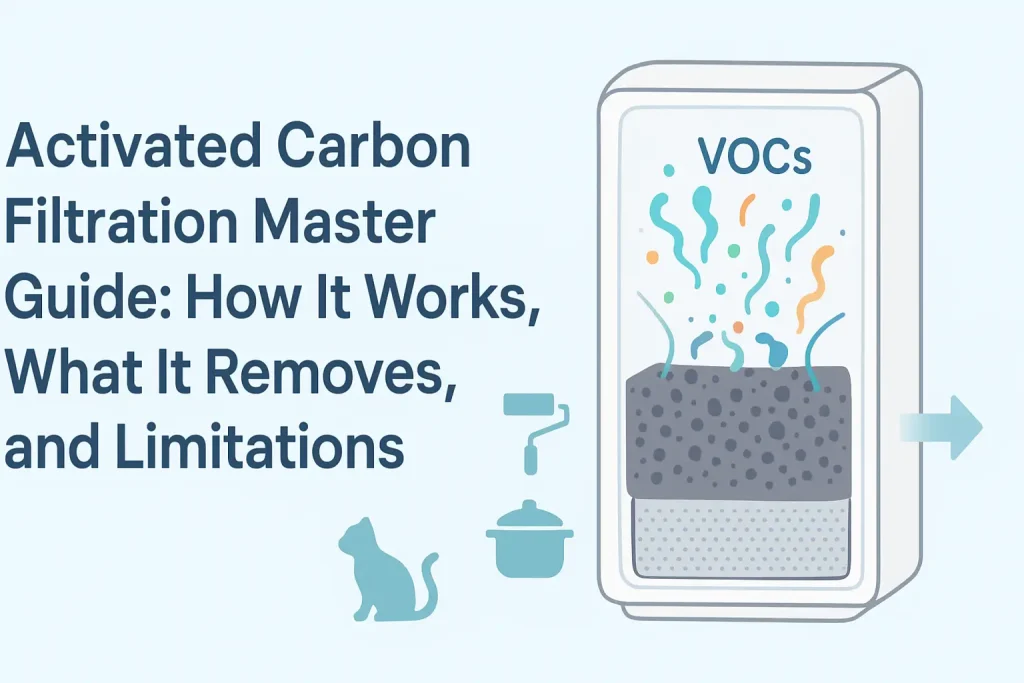
Can I build a DIY purifier that also removes VOCs and odors, not just particles?
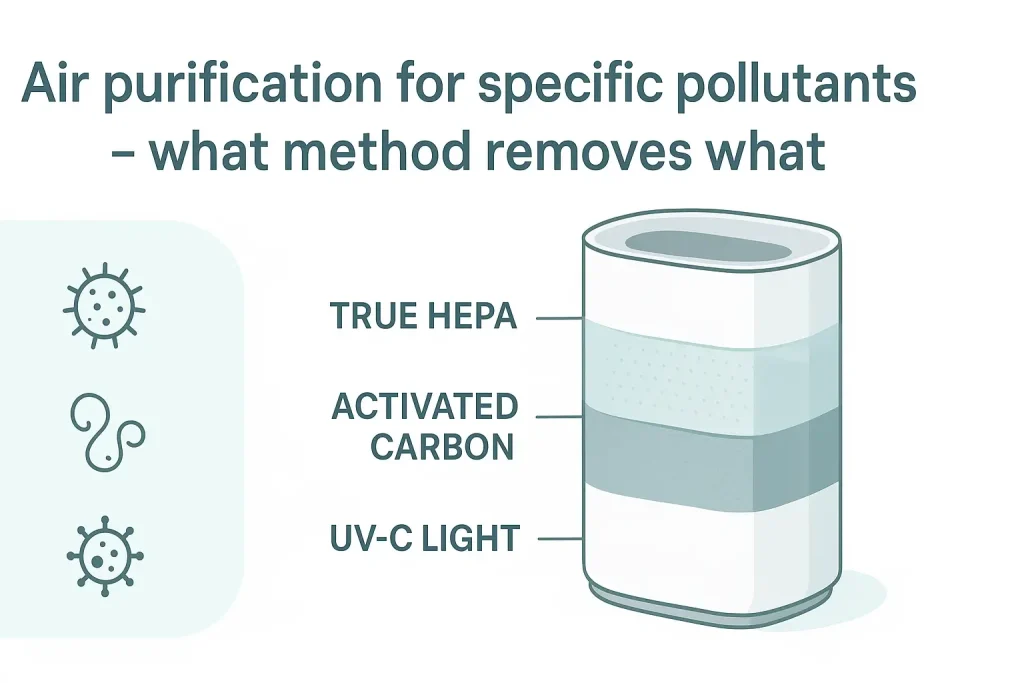
A standard box fan MERV 13 build removes particles but does not remove VOCs, formaldehyde, or odors because MERV 13 is a mechanical particulate filter with no gas-phase adsorption capability. To add VOC and odor removal, attach a 20×20 activated carbon pre-filter sheet to the intake side of the MERV 13 filter using the same tape or bungee method that secures the primary filter. The carbon sheet adsorbs gaseous pollutants while the MERV 13 filter captures particles.
The carbon pre-filter sheet adds approximately $12 to $18 to the build cost and requires replacement every 2 to 3 months because the carbon becomes saturated and loses adsorption capacity. An activated carbon sheet in a DIY build provides roughly 10-15% of the gas-phase filtration capacity of a dedicated commercial unit like the Austin Air HealthMate with its 15-pound carbon bed. This is sufficient for light odors and low-level VOCs from cooking or new furniture but not for significant chemical sensitivity or formaldehyde remediation.
For serious VOC concerns including off-gassing from new construction materials, activated carbon has documented limitations as a standalone solution for certain chemical classes including formaldehyde at low concentrations. A DIY unit with a carbon sheet is a helpful addition, not a complete VOC management strategy. For high VOC loads, a dedicated commercial unit with a multi-pound carbon bed or source removal is the appropriate intervention.
How do I know if my DIY purifier is actually working and cleaning the air?
The only way to verify that your DIY purifier is working is to measure PM2.5 concentrations in the room with an air quality monitor before turning the unit on, then measure again after 30 to 60 minutes of operation. A properly built unit reduces PM2.5 by 70-90% within 30 minutes in a closed room with the door shut. Without a measurement, you are guessing, and many underperforming builds go unnoticed because the air looks and smells the same with or without effective filtration.
A PM2.5 air quality monitor costs $40 to $80 and provides real-time particle concentration readings in micrograms per cubic meter. Place the monitor at breathing height in the center of the room, away from the purifier’s direct exhaust stream. Take a baseline reading with the purifier off, turn the unit on to medium speed, and check the reading at 15, 30, and 60 minutes. A properly functioning unit shows a steady downward trend with the largest drop occurring in the first 15 minutes.
If PM2.5 levels do not drop by at least 50% within 30 minutes, the most likely causes are filter gaps allowing bypass air, an undersized fan with insufficient CFM, or the room door being open and the purifier attempting to clean a volume larger than it is rated for. Close the door, check the filter seal, and verify the fan is on medium or high speed, then retest.
Building a box fan MERV filter air purifier is the single most cost-effective way to achieve high-quality particulate filtration in any room. A $60 build with a high-velocity fan and a properly sealed MERV 13 filter delivers CADR performance that matches commercial units costing three to five times as much. The filtration science is identical: a fan moves air through a dense filter, and particles get trapped. The only difference between a DIY build and a $200 commercial unit is the plastic housing, the marketing budget, and the retail markup. For readers who value performance per dollar above sleek design and silent operation, a DIY box fan purifier is the clear recommendation, with a total first-year cost under $100 including filter replacements.