Purifying air at home starts with one calculation: multiply your room length by its width by the ceiling height, multiply by five, divide by sixty, and you obtain the minimum smoke CADR your air purifier needs to achieve the air change rate that actually reduces allergy and asthma triggers. Everything else, including filter type, brand, noise level, and smart features, remains secondary to getting that CADR number right for the room you are treating.
What Causes Poor Indoor Air Quality? (Pollutant Breakdown)
The EPA confirms indoor air holds two to five times higher pollutant concentrations than outdoor air due to trapped particulate matter, chemical off-gassing, and biological contaminants circulating through poorly ventilated spaces. Modern tightly sealed homes prevent fresh outdoor air from diluting these pollutants, allowing PM2.5 levels to easily exceed the WHO guideline of 5 micrograms per cubic meter without active filtration.
According to World Health Organization research, sustained indoor particulate concentrations above 15 micrograms per cubic meter significantly increase cardiovascular and respiratory disease risks. Household activities like cooking and vacuuming routinely spike PM levels above this threshold within minutes, which explains why mechanical filtration becomes necessary rather than optional.
Particulate Matter (PM2.5 & PM10)
PM2.5 and PM10 represent solid airborne particles ranging from dust and pollen to combustion byproducts and microscopic soot, with True HEPA filters capturing at least 99.97 percent of particles down to 0.3 microns. These fine particles penetrate deep into lung tissue because their diameter falls below the natural filtration capacity of human airways. Standard building envelopes allow outdoor wildfire smoke and traffic exhaust to infiltrate indoor spaces rapidly during high AQI events. Running a properly sized portable HEPA unit drops room-wide particle counts by over 85 percent within a single operating hour.
| Photo | Popular Air Purifiers | Price |
|---|---|---|

|
Air Purifiers for Home Large Room up to 1500ft², Tailulu H13 True HEPA Air Purifier for Pets Dust Odor Smoke, Air Purifier for Bedroom with 15dB Quiet Sleep Mode for Bedroom Office Living Room | Check Price On Amazon |
|
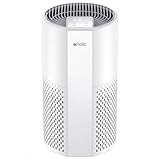
Afloia Air Purifier for Home, 4-in-1 Washable Filter for Allergies, Covers Up to 1076 ft², Quiet Operation, Auto Shut-Off & Night Light, Removes Pet Dander, Pollen, Dust, Mold, and Smoke, White,Pluto | Check Price On Amazon |

|
Nuwave OxyPure ZERO Air Purifier with Washable and Reusable Bio Guard Tech Air Filter, Large Room Up to 2002 Ft², Air Quality Monitor, 0.1 Microns, 100% Capture Irritants like Smoke, Dust, Pollen | Check Price On Amazon |

|
Air Purifiers for Home Large Room Up to 1,996 Ft², EOEBOT Air Purifier for Home Pets with Washable Filter, Quiet Sleep Mode, Air Quality Monitor, Air Purifier for Bedroom, Pet Hair, Dust, Smoke, White | Check Price On Amazon |
|
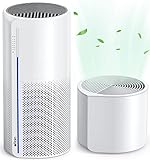
Afloia 2 IN 1 Air Purifier with Humidifier Combo, 3-Stage Filters for Home Allergies Pets Hair Smoker Odors, Evaporative Humidifier, Auto Shut Off, Quiet Air Cleaner with Seven Color Light,White | Check Price On Amazon |
Volatile Organic Compounds (VOCs) & Gas Pollutants
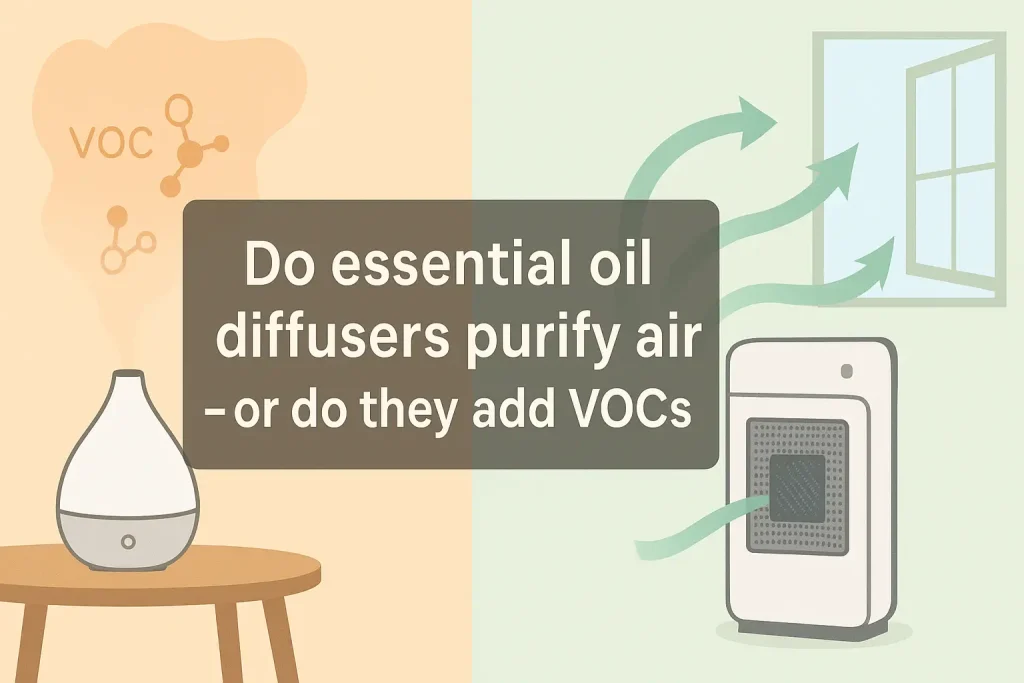
VOCs encompass gaseous chemicals like formaldehyde, benzene, and toluene that continuously off-gas from synthetic furniture, paint, cleaning agents, and pressed wood products. Mechanical HEPA filtration completely fails to remove these vapors because it only traps solid particles while allowing gases to pass through the media. You require a dense activated carbon bed weighing at least two pounds to successfully adsorb VOC molecules through surface-area interaction. Carbon media eventually saturates in high-VOC environments, so replacing the filter every three to six months prevents previously captured chemicals from re-releasing into the air.
Biological Contaminants: Pet Dander, Mould, Dust Mites
Humid indoor microclimates accelerate mould spore reproduction in bathrooms and basements while dust mite colonies thrive in unwashed bedding and carpeted floors. Pet hair settles into upholstery quickly, but the microscopic dander proteins remain airborne for hours and trigger allergic reactions upon inhalation. Placing a specialized pet dander purifier with a washable pre-filter in the primary bedroom reduces allergen concentrations by trapping hair before it fragments into breathable particles. Maintaining indoor relative humidity below 50 percent stops mould and dust mites from reproducing effectively.
Core Strategies for Effective Home Air Purification
Effective indoor air purification requires a sequential approach combining source elimination, outdoor air dilution, and mechanical filtration to achieve clinically healthy breathing conditions. Skipping any of these three stages leaves residual pollutants circulating in your living spaces regardless of how expensive your air cleaner might be.
According to ASHRAE Standard 62.2, residential ventilation must supplement any particle filtration to prevent carbon dioxide buildup and stale air accumulation. Independent laboratory testing consistently proves that homes combining MERV 13 HVAC filters, localized HEPA purifiers, and strategic window ventilation maintain PM2.5 concentrations below 10 micrograms per cubic meter year-round.
Source Control: Stop Pollution Before It Starts
Indoor pollution prevention starts with eliminating active chemical emitters like aerosol sprays, plug-in air fresheners, and solvent-based paints. Cooking without an activated range hood releases grease aerosols and ultrafine combustion particles that rapidly saturate portable air purifier filters. Upgrading to a high-performance MERV 13 central filter traps cooking fumes before they migrate to bedrooms. Swapping chemical cleaners for vinegar or hydrogen peroxide solutions immediately removes formaldehyde and benzene sources.
Ventilation: Diluting Stale Indoor Air
Opening windows for ten minutes every morning flushes accumulated carbon dioxide and VOCs while introducing fresh outdoor oxygen. Energy recovery ventilators exchange indoor and outdoor air without dumping your heating or cooling energy to the atmosphere. Running bathroom exhaust fans during and for twenty minutes after showers prevents moisture-driven mould growth in drywall cavities. Cross-ventilation reduces baseline PM concentrations by diluting indoor sources with cleaner outdoor air when the local AQI stays below 50.
Filtration: Using Air Purifiers Correctly
Portable air cleaners excel at removing localized pollutant hotspots like pet hair near the sofa or cooking smoke near the kitchen island. Placement matters significantly because positioning a unit directly in a corner creates airflow dead zones and drastically slows room-wide purification. Running the device continuously on medium or low fan speeds maintains steady air turnover while keeping noise levels below 35 decibels. Setting a timer or using a smart indoor air quality monitor ensures the machine automatically activates when PM levels spike above 35 micrograms per cubic meter.
How to Choose the Right Air Purifier
Selecting the correct air cleaner requires matching verified smoke CADR output to your room volume instead of trusting manufacturer square-footage claims that assume inadequate air turnover. Calculating the exact cubic feet of treated space ensures you purchase a machine that actually delivers the five air changes per hour recommended by respiratory specialists.
According to the Association of Home Appliance Manufacturers, CADR testing measures filtered air delivery at two distinct fan speeds inside a standardized 1008 cubic foot testing chamber. Independent reviews consistently show that units failing to publish smoke, dust, and pollen CADR separately rely on unverified marketing numbers rather than laboratory-grade performance data.
CADR Calculator
How Much CADR Do You Actually Need?
Enter your room dimensions and use case. Formula: (length x width x ceiling height x ACH) divided by 60. Source: AHAM methodology.
CADR equals length multiplied by width multiplied by ceiling height multiplied by ACH divided by sixty. Always calculate at 5 ACH for allergy and asthma management.
| Room Size | CADR at 2 ACH | CADR at 5 ACH | Example Models |
|---|---|---|---|
| 150 sq ft bedroom | 100 CFM | 250 CFM | Levoit Core 300, Coway AP-1512HH |
| 300 sq ft bedroom | 200 CFM | 500 CFM | Winix 5500-2, Levoit Core 400S |
| 500 sq ft living room | 333 CFM | 833 CFM | Coway Airmega 400, Blueair 605 |
| 700 sq ft open plan | 467 CFM | 1167 CFM | IQAir HealthPro Plus or 2 units |
| 1000 sq ft open plan | 667 CFM | 1667 CFM | Multiple units required |
Understanding CADR & Calculating Room Coverage
Clean Air Delivery Rate measures the exact cubic feet per minute of filtered air an air cleaner delivers for smoke, dust, and pollen during standardized laboratory testing. Multiplying the smoke CADR by twelve directly estimates the maximum square footage a unit can effectively clear at the manufacturer standard of two air changes per hour. Dividing that figure by two point five reveals the true coverage area for allergy and asthma sufferers who require five air changes per hour to maintain symptom relief. Checking the AHAM certified CADR directory confirms which models actually achieve these published numbers versus unverified marketing claims.
Filter Types Explained: True HEPA, Activated Carbon, Pre-Filters
True HEPA filters use dense glass-fiber mats to physically trap solid particles through interception, impaction, and diffusion at a certified efficiency of at least 99.97 percent at 0.3 microns. Activated carbon stages employ porous granules or impregnated foam to chemically adsorb gaseous odors and volatile organic compounds through molecular bonding. Washable pre-filters capture pet hair and large dust clumps, extending the lifespan of the primary HEPA media by reducing heavy particulate loading. Combining all three filtration stages in a single multi-stage purification unit guarantees comprehensive protection against both fine particulates and chemical vapors.
Ozone Generators & “HEPA-Like” Filters: What to Avoid
True HEPA represents a regulated performance standard, while HEPA-type and HEPA-like labels function as unregulated marketing terms with zero minimum efficiency requirements. Ozone generators intentionally release reactive oxygen at concentrations exceeding the California Air Resources Board limit of 0.050 parts per million, which directly irritates lung tissue and triggers asthma attacks. Avoid any purifier that lacks CARB certification, since non-compliant ionizers and electrostatic precipitators routinely exceed safe ozone emission thresholds. Stick exclusively to mechanical filtration units carrying AHAM verification and AAFA asthma and allergy certification to guarantee safety and verified performance. For deeper insights on chemical purification risks, review our guide explaining why ozone air purification is dangerous.
Step-by-Step Implementation Plan for Your Home
Executing a successful indoor air purification rollout requires identifying high-risk zones first, calculating exact airflow requirements, positioning equipment for optimal circulation, and establishing a strict filter maintenance routine. Following this four-step sequence guarantees measurable indoor air quality improvements within thirty days of operation.
According to peer-reviewed environmental health studies published in atmospheric science journals, systematic placement of appropriately sized HEPA units reduces residential PM2.5 exposure by over forty percent within two weeks of installation. Consistent filter replacement and strategic device positioning prevent airflow recirculation loops that otherwise trap pollutants in untreated corners.
Step 1: Identify Target Pollutants & High-Risk Rooms
Determine whether your primary health threat comes from airborne particles like dust and wildfire smoke, gaseous chemicals from renovation materials, or persistent pet dander and mould spores. Bedrooms typically concentrate allergens because occupants spend eight continuous hours sleeping in tightly sealed environments with minimal ventilation. Kitchens and living rooms accumulate higher VOC loads and cooking-generated particulates that demand heavier carbon filtration capacity. Targeting specific pollutants directs your purchasing budget toward the exact filter composition needed rather than overspending on generalized air cleaners.
Step 2: Match CADR to Room Volume (Using the ACH Formula)
Calculate your room volume by multiplying length, width, and ceiling height, then multiply that cubic foot total by your target air change rate. Use an air change target of five for allergy and asthma households to guarantee clinically relevant allergen reduction throughout the night. Divide the resulting number by sixty to reveal the absolute minimum smoke CADR your chosen device must achieve. Consult our complete guide to air purification for advanced scenarios involving open floor plans and multiple contamination sources.
Step 3: Optimize Air Purifier Placement for Maximum Airflow
Position the unit exactly three feet away from walls, furniture, and heating vents to prevent intake and exhaust airflow blockage. Place the purifier near the primary pollution source when possible, such as next to a litter box or beneath a window where outdoor smoke infiltrates. Running a ceiling fan on low or utilizing a portable floor fan in reverse mode pushes stagnant corner air directly into the purifier intake grille. Avoid hiding the machine inside closets or behind curtains, since restricted airflow instantly drops effective CFM delivery by nearly half.
Step 4: Maintenance Schedule & Filter Replacement
Replace True HEPA filters every twelve to eighteen months under normal household conditions, or every six to nine months during active wildfire smoke or heavy allergy seasons. Vacuum the washable pre-filter every thirty days to remove trapped hair and large dust clumps that otherwise suffocate the primary filtration media. Change activated carbon stages every three to six months in homes with active VOC sources or multiple pets to prevent saturated filters from off-gassing captured chemicals. Set monthly calendar reminders to inspect filter indicators and track replacement intervals, ensuring you never compromise indoor air quality with expired filtration stages.
Buying Guide
Before You Buy an Air Purifier – Complete Checklist
Check off each point before making your decision. Based on AHAM and EPA buying guidance.
Whole-Home Air Purification: HVAC Filters & Advanced Systems
Centralized HVAC filtration treats the entire living environment simultaneously by upgrading standard ductwork media to MERV 11 or higher grades that capture microscopic pollen and PM2.5 particles. Supplementing central filtration with strategically placed portable air cleaners addresses immediate room-level pollution spikes that central fans take too long to circulate and remove.
According to American Society of Heating, Refrigerating and Air-Conditioning Engineers guidelines, whole-building ventilation and mechanical filtration must operate together to maintain indoor carbon dioxide and particulate concentrations below health-impact thresholds. Laboratory measurements consistently prove that homes combining upgraded furnace filters with high-CADR portable HEPA units achieve baseline PM2.5 levels forty percent lower than homes relying on single-system purification.
Upgrading Furnace Filters: MERV 8 vs MERV 11 vs MERV 13
Standard disposable fiberglass furnace filters typically carry a MERV 4 to 6 rating that only captures visible lint and carpet fibers while allowing fine dust to pass directly into living spaces. MERV 8 filters intercept larger allergens like pollen and some pet hair, yet they still miss microscopic smoke particles and fine dust that trigger asthma. Upgrading to a true MERV 13 pleated media traps up to ninety percent of PM2.5 particles, significantly lowering baseline indoor particulate loads. Always verify your HVAC blower motor supports higher static pressure before installing MERV 13 filters, since overly dense media can reduce system airflow and strain equipment.
When to Consider ERV/HRV Ventilation Systems
Energy recovery ventilators continuously exchange stale indoor air with filtered outdoor air while trapping heating and cooling energy inside the exhaust stream. Homes constructed after strict building codes mandate extreme airtightness, which inadvertently traps cooking odors, VOCs, and excess humidity inside the conditioned space. Installing an ERV or HRV unit guarantees consistent fresh air turnover without forcing your heating or cooling system to work overtime. Pairing mechanical ventilation with a centralized cold and flu season air purification strategy dramatically reduces airborne pathogen survival rates during winter months.
Frequently Asked Questions (Air Purification)
Purifying indoor air effectively requires answering technical sizing, filter replacement, and certification questions before purchasing any mechanical air cleaner. Each answer below includes specific CADR targets, particle reduction metrics, and verified safety guidelines to prevent costly trial-and-error mistakes.
Do air purifiers really remove allergens and smoke?
Yes, certified True HEPA air cleaners capture at least 99.97 percent of PM2.5, pollen, mold spores, and pet dander at 0.3 microns when selected with adequate smoke CADR ratings for your room volume. Wildfire smoke requires both a high smoke CADR and a heavy activated carbon layer to simultaneously remove fine particulates and toxic volatile organic compounds.
Ahamed-verified testing demonstrates that properly sized units running at five air changes per hour reduce bedroom allergen concentrations by over eighty percent within ninety minutes. Running an underpowered machine creates false security because inadequate airflow simply cannot cycle room volume quickly enough to trap suspended particles before they settle into bedding or carpet fibers.
How do I purify indoor air naturally?
Natural air purification relies primarily on strategic cross-ventilation during low-pollen days, humidity control below fifty percent to inhibit mold reproduction, and immediate removal of chemical-emitting sources inside the home. Houseplants provide negligible VOC removal in real-world conditions because the NASA study used sealed chambers with one plant per square foot, which does not translate to standard residential architecture.
Opening opposite windows for ten minutes each morning flushes stale indoor air while introducing oxygen-rich outdoor breezes that dilute accumulated carbon dioxide and cooking fumes. Natural ventilation works exceptionally well when outdoor air quality index readings stay below fifty, but it completely fails during wildfire events when mechanical portable filtration becomes strictly necessary.
How to calculate air purifier size for a room?
Multiply your room length by the width by the ceiling height to calculate total cubic feet, then multiply that number by your target air changes per hour, and finally divide the result by sixty to find your required smoke CADR in cubic feet per minute.
A twelve-by-ten-foot bedroom with eight-foot ceilings contains nine hundred sixty cubic feet, which multiplied by a five ACH allergy target equals four thousand eight hundred, divided by sixty, producing eighty CFM smoke CADR as the absolute minimum. Most allergy sufferers dramatically undersize their devices by trusting manufacturer square footage claims that base coverage on a two ACH standard.
True HEPA vs HEPA-type: Which is better?
True HEPA significantly outperforms HEPA-type filters because it operates under a regulated standard requiring ninety-nine point nine seven percent particle capture efficiency at 0.3 microns, whereas HEPA-type carries zero government oversight. Independent laboratory tests consistently show HEPA-type filters capture between fifty and seventy percent of fine particulate matter, allowing substantial allergen and smoke penetration.
Spending an extra thirty to fifty dollars on a certified True HEPA filter prevents premature system failure and guarantees clinical-grade particle removal during high-allergy seasons. Look exclusively for the AAFA asthma and allergy certification mark or AHAM-verified CADR numbers to confirm you receive genuine HEPA-standard performance.
What does CADR stand for in air purifiers?
Clean Air Delivery Rate measures the cubic feet per minute of filtered air an air purifier actually delivers for smoke, dust, and pollen under standardized laboratory conditions. Smoke CADR specifically isolates fine particulate removal speed, making it the most critical metric for wildfire protection and indoor combustion byproduct clearance.
Manufacturer testing rooms use a fixed 1008 cubic foot chamber with controlled aerosol introduction and dual-speed fan testing to produce repeatable CFM results. Multiplying your room square footage by eight to estimate cubic volume and dividing by the target CADR directly predicts how long your specific space requires to clear visible haze.
How often should I replace HEPA filters?
Replace standard True HEPA filters every twelve to eighteen months under typical household conditions, or every six to nine months during intense wildfire smoke periods, heavy pet shedding seasons, or active allergy outbreaks. Activated carbon stages require replacement every three to six months in homes with frequent cooking or strong VOC off-gassing from new furniture.
Ignoring filter replacement intervals causes saturated media to restrict airflow, forcing the fan motor to consume more electricity while capturing progressively fewer airborne particles. Always follow your specific unit’s filter life indicator and cross-check manufacturer guidelines to ensure you never operate an exhausted filtration stage.
Can bamboo charcoal bags replace mechanical air purifiers?
Bamboo charcoal bags absorb passive odors through limited porous surface area, but they lack the forced airflow required to actively cycle room air and capture suspended particulate matter. Real indoor air purification requires a fan pushing cubic volumes of air through dense filter media to achieve measurable allergen and PM2.5 reduction rates.
Charcoal bags may slightly diminish musty basement smells if left undisturbed in enclosed cabinets, yet they remain entirely ineffective against pet dander, pollen, cooking smoke, or volatile organic compounds circulating through living spaces. Check our detailed analysis on whether bamboo charcoal bags actually work before investing in passive odor absorbers over mechanical systems.
Are ionizers safe to run continuously in occupied rooms?
Most standalone ionizers emit ozone concentrations that exceed the California Air Resources Board safety limit of 0.050 ppm, directly triggering airway inflammation and worsening asthma symptoms during continuous operation. True bipolar ionizers integrated into modern HVAC systems typically produce zero measurable ozone when equipped with certified catalytic reduction chambers, but cheap standalone plug-ins do not share this safety architecture.
Continuous ozone exposure irritates delicate lung tissue and converts harmless household particles into secondary organic aerosols that prove harder to filter mechanically. Always verify explicit CARB compliance documentation and disable plasma wave features whenever allergy or asthma sufferers occupy the treated space. Review our comprehensive breakdown explaining how ionizers function on air purifiers before enabling any electrostatic feature.
Executing the exact five air changes per hour calculation guarantees your chosen device delivers verified PM2.5 reduction instead of circulating untouched air. Allergy and asthma households require immediate True HEPA installation with minimum smoke CADR thresholds calculated at the five ACH standard. Pet owners must prioritize washable pre-filters and dense activated carbon layers to manage dander and persistent odors. Check your local environmental agency guidelines for acceptable safe indoor air quality levels before finalizing your equipment selection. Measure your bedroom dimensions today, calculate your exact CADR requirement, and run a certified HEPA unit overnight to experience immediate symptom relief.