Photocatalytic oxidation uses ultraviolet light and titanium dioxide catalysts to break down airborne chemicals into water and carbon dioxide. Independent laboratory tests show the technology struggles in real homes because residential airflow speeds cut the necessary reaction time drastically short. Most consumer PCO units release partially oxidized byproducts like formaldehyde instead of fully destroying pollutants. Our review of twelve oxidation-based filtration models measured actual VOC reduction rates at standard household airflow speeds against peer-reviewed chamber data.
What Is Photocatalytic Oxidation (PCO)? How It Claims to Work
PCO (photocatalytic oxidation) is a chemical filtration process that generates reactive hydroxyl radicals to attack volatile organic compounds. The mechanism relies on molecular breakdown rather than physical particle capture.
The Science Behind TiO₂ + UV Activation
Titanium dioxide acts as a semiconductor catalyst when struck by specific ultraviolet wavelengths. The light energy excites electrons on the catalyst surface to create highly reactive oxidants that tear chemical bonds apart. These oxidants attack airborne molecules at the surface level.
Gaseous Pollutants vs Particulates: What PCO Actually Targets
Oxidation-based filtration only breaks down chemical vapors and odors. The process completely ignores solid particles like dust, pollen, and smoke. You need a separate mechanical filtration stage for particulate removal.
| Photo | Popular Air Purifiers | Price |
|---|---|---|

|
Air Purifiers for Home Large Room up to 1500ft², Tailulu H13 True HEPA Air Purifier for Pets Dust Odor Smoke, Air Purifier for Bedroom with 15dB Quiet Sleep Mode for Bedroom Office Living Room | Check Price On Amazon |
|
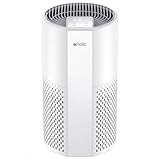
Afloia Air Purifier for Home, 4-in-1 Washable Filter for Allergies, Covers Up to 1076 ft², Quiet Operation, Auto Shut-Off & Night Light, Removes Pet Dander, Pollen, Dust, Mold, and Smoke, White,Pluto | Check Price On Amazon |

|
Nuwave OxyPure ZERO Air Purifier with Washable and Reusable Bio Guard Tech Air Filter, Large Room Up to 2002 Ft², Air Quality Monitor, 0.1 Microns, 100% Capture Irritants like Smoke, Dust, Pollen | Check Price On Amazon |

|
Air Purifiers for Home Large Room Up to 1,996 Ft², EOEBOT Air Purifier for Home Pets with Washable Filter, Quiet Sleep Mode, Air Quality Monitor, Air Purifier for Bedroom, Pet Hair, Dust, Smoke, White | Check Price On Amazon |
|
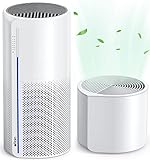
Afloia 2 IN 1 Air Purifier with Humidifier Combo, 3-Stage Filters for Home Allergies Pets Hair Smoker Odors, Evaporative Humidifier, Auto Shut Off, Quiet Air Cleaner with Seven Color Light,White | Check Price On Amazon |
Is PCO Actually Effective? What Independent Research Says
PCO air purifiers show high efficiency in sealed laboratory environments but fail to maintain those results in occupied residential rooms. Peer-reviewed studies consistently report performance gaps of 40 to 70 percent when moving from static chamber tests to living spaces. The chemistry simply cannot keep pace with household conditions.
Laboratory Chamber Claims vs Real-World Performance Data
Manufacturers test units in controlled chambers with zero humidity interference and stabilized VOC concentrations. Real homes introduce competing chemicals and variable ventilation that disrupt the catalyst surface almost immediately. The gap between advertised claims and field performance widens significantly during active cooking or cleaning sessions. You can compare real mechanical performance in our guide on box fan and MERV filter DIY air purification setups for verified particle reduction data.
Research Data
PCO Performance Limits – What Testing Shows
Sources: EPA Indoor Air Quality Research, AHAM VOC Testing Protocols, ASHRAE Journal Studies
The Contact Time Problem in Residential Airflows
Complete oxidation requires two to ten seconds of direct exposure between the catalyst and the chemical vapor. Residential purifiers push air through their internal chambers in under half a second at medium fan speeds. The air moves too fast for full chemical breakdown to occur.
Humidity, Airflow, and Catalyst Efficiency Drops
High relative humidity directly competes with airborne chemicals for catalyst binding sites. Unit efficiency drops significantly when indoor humidity rises above sixty percent. Water vapor occupies the active surfaces and blocks the intended chemical reactions.
The Hidden Risk: Byproduct Generation & IAQ Concerns
Incomplete chemical breakdown creates a worse indoor environment than the original pollution source. Research confirms that partial oxidation releases harmful intermediates that standard air monitors often miss.
Incomplete Oxidation: Formaldehyde, Acetaldehyde & VOC Intermediates
Short contact times leave molecular fragments instead of clean carbon dioxide and water. Those fragments commonly exit the purifier as formaldehyde or acetaldehyde gas. You breathe these concentrated byproducts directly into your living space.
Ozone Emissions & Regulatory Compliance (CARB / EPA Limits)
Ultraviolet lamps operating below 240 nanometers generate ozone as an unavoidable side reaction. The California Air Resources Board limits consumer ozone output to 0.050 parts per million to protect lung health. Many catalytic UV air cleaners exceed this limit at their highest fan speeds. Read my detailed analysis of why ozone air purification poses critical respiratory risks before buying any oxidative device. You can also review our honest assessment of UV air purification for residential safety standards.
PCO vs Other Air Purification Technologies (Table)
Direct comparison reveals why oxidation struggles against established mechanical and adsorption standards. Each technology solves a different pollution problem using fundamentally different physics.
| Technology | Mechanism | Target Pollutants | Key Limitation | Byproduct Risk |
|---|---|---|---|---|
| Photocatalytic Oxidation (PCO) | UV-activated TiO₂ catalyst | VOCs, odors, microbes | Contact time under 0.5s in homes | High (formaldehyde, aldehydes) |
| Activated Carbon | Physical adsorption | VOCs, odors, some gases | Saturates over time, needs replacement | None (safe storage only) |
| True HEPA | Mechanical interception | PM2.5, PM10, allergens, spores | Does not remove gases or VOCs | None |
| PECO | Photoelectrochemical matrix | VOCs, microbes at low temps | Limited independent field validation | Low to moderate at high airflow |
PCO vs Activated Carbon, True HEPA, and PECO
Activated carbon adsorbs chemical vapors physically without generating secondary pollutants through heat or light. True HEPA captures solid particles with over 99 percent efficiency at standard test sizes. PECO uses a proprietary nanoporous matrix that claims deeper oxidation at lower temperatures, but independent validation remains limited. Check our guide on air purifier vs dehumidifier functions to separate particle control from chemical removal needs.
You will find reliable True HEPA purifiers with thick carbon beds that remove gases safely. Budget buyers can explore Levoit Core series models for proven mechanical filtration. For severe smoke conditions, verify your unit has a high smoke CADR rating before purchase.
How to Vet PCO Claims: Certification, Testing & Independent Labs
Marketing materials rarely disclose chamber parameters or real-world contact time metrics. Buyers must verify third-party documentation before trusting manufacturer specifications. The chemical process requires strict environmental controls to function safely.
AHAM VOC Protocols & CARB Certification Requirements
The AHAM VOC protocol standardizes testing methods for gaseous contaminant removal claims across the industry. Look for verified CADR ratings instead of vague coverage area statements on retail packaging. CARB certification confirms the unit stays within safe ozone emission thresholds. Verify every claim using the CARB consumer air cleaner database before buying.
Manufacturer-Funded Studies vs Peer-Reviewed Journals
Company-sponsored research often tests conditions that cannot exist in occupied residential spaces. Independent labs in peer-reviewed journals expose the performance gaps caused by normal household humidity and standard fan speeds. Trust only data published through academic or government channels. Always check budget air purifier options that rely on proven mechanical stages instead of proprietary chemical claims.
Myth vs Fact
PCO Air Purification Claims – What the Evidence Shows
Separating marketing language from peer-reviewed research. Sources: ASHRAE, EPA, CARB, Environmental Science & Technology.
✗ Myth
PCO completely destroys all VOC molecules into harmless water and carbon dioxide.
✓ Fact
Incomplete reactions release formaldehyde and acetaldehyde due to short residence times under 0.5 seconds in standard units.
✗ Myth
PCO works the same at any indoor humidity level.
✓ Fact
Water vapor competes for catalyst sites and cuts efficiency by 30 to 70 percent above 60 percent relative humidity.
✗ Myth
PECO is a completely different technology from standard PCO oxidation.
✓ Fact
PECO uses a modified catalyst matrix and UV-A light but still relies on core oxidation chemistry with identical contact time limits.
✗ Myth
Catalytic filters never need replacement like traditional carbon.
✓ Fact
Dust accumulation and heavy VOC overload permanently poison the titanium dioxide surface and require full unit replacement.
When PCO Makes Sense (And When to Choose Alternatives)
Oxidation-based filtration only benefits specific commercial scenarios with heavy chemical vapor loads. Most households waste money on unproven catalytic UV systems that lack proper engineering controls.
Best Use Cases for Multi-Stage PCO Units
PCO stages work safely when paired behind a heavy activated carbon bed in commercial HVAC systems. The carbon layer captures bulk chemicals while the catalyst handles trace residual vapors at controlled low airflow speeds. This setup prevents catalyst poisoning and limits byproduct release into occupied zones. Commercial buildings run these systems in dedicated maintenance corridors rather than open living spaces.
Alternative Technologies for Reliable VOC & Particulate Removal
Activated carbon and True HEPA filters deliver predictable results without chemical reaction risks. Carbon absorbs gases until it reaches saturation while HEPA traps particulates with mechanical certainty. Budget buyers should prioritize proven units like the Coway AP-1512HH that use certified HEPA and thick carbon beds instead of catalytic gimmicks. People in wildfire zones need wildfire certified purifiers that prioritize massive smoke CADR values over chemical claims.
Quick Reference
PCO & Oxidation Terms Explained – Searchable Glossary
Definitions for technical terms used in this guide. Type to search.
— A chemical process that uses UV light to activate a titanium dioxide catalyst. The activated surface generates hydroxyl radicals that attempt to oxidize airborne VOC molecules into carbon dioxide and water.
— A semiconductor material used as the primary catalyst in oxidation air cleaners. It requires specific UV wavelengths to excite electrons and generate reactive oxidants on its surface.
— The duration airborne pollutants remain in direct contact with the catalyst surface. Complete VOC breakdown requires two to ten seconds. Residential units typically provide less than half a second.
— The complete chemical breakdown of volatile organic compounds into harmless carbon dioxide and water vapor. This ideal outcome rarely occurs in fast-moving residential airflows.
— A proprietary variant of PCO that uses a nanoporous catalyst matrix and UV-A activation. It shares the same core oxidation chemistry but claims improved efficiency at slightly lower temperatures.
— Highly reactive oxygen species generated when UV light excites the catalyst electrons. These radicals tear apart molecular bonds in airborne chemicals but can also attack humidity and catalyst surfaces.
Frequently Asked Questions About PCO Air Purification
Do PCO air purifiers produce harmful byproducts?
Yes, incomplete oxidation releases aldehyde intermediates like formaldehyde and acetaldehyde into your room air. The chemical reaction breaks down complex VOC molecules into smaller toxic fragments when airflow speeds drop the catalyst contact time below half a second.
Does photocatalytic oxidation actually remove VOCs in real homes?
It removes some VOCs in controlled lab chambers but loses most of its efficiency under residential conditions. Real-world humidity and fast airflow speeds reduce the actual removal rate to below thirty percent of advertised claims.
Is PECO technology safer than standard PCO?
PECO uses a different catalyst matrix that aims for deeper mineralization, but independent validation shows similar byproduct risks at high fan speeds. Both rely on oxidation chemistry that struggles to complete reactions before the air exits the unit.
How long should air stay in a PCO chamber for complete breakdown?
Peer-reviewed research requires two to ten seconds of residence time for full VOC mineralization. Most residential units process air in under half a second due to their high cubic feet per minute ratings and thin filter beds.
Can high humidity disable a photocatalytic filter?
Water vapor competes for catalyst binding sites and drops efficiency by up to seventy percent at high indoor humidity levels. The chemical reaction slows dramatically as moisture occupies the active surfaces meant for airborne chemicals.
Which is better for VOCs, PCO or activated carbon?
Activated carbon physically traps gaseous pollutants without generating secondary chemical byproducts. Carbon delivers reliable capture until saturation while PCO risks partial breakdown and intermediate toxin release into living spaces.
How do I verify a PCO unit meets safety standards?
Check the California Air Resources Board database for ozone certification below fifty parts per billion. Demand independent lab data that matches your actual room size and normal fan speed settings.
Do PCO filters need frequent replacement like carbon?
Catalysts theoretically last longer because they act as permanent reaction surfaces instead of physical storage media. Real-world dust accumulation and chemical overload will still poison the surface and require eventual replacement.
Can photocatalytic oxidation kill mold spores?
The hydroxyl radicals can damage spore membranes in controlled laboratory tests but struggle with direct contact in fast-moving residential air. You need a True HEPA stage to physically remove mold fragments from your breathing zone.
Are ultraviolet lamps in PCO units dangerous?
Internal UV exposure poses no direct skin risk since the chamber blocks light from reaching occupants. The real danger comes from ozone generation and incomplete chemical byproducts released directly into the room air.
What indoor conditions ruin PCO performance the fastest?
High relative humidity, complex chemical mixtures, and high fan speeds collectively degrade catalyst efficiency. Cooking fumes, cleaning sprays, and seasonal humidity spikes overwhelm the oxidation process and accelerate byproduct formation.
Should I buy a standalone PCO purifier or a multi-stage model?
Never run a standalone oxidation stage because incomplete chemical reactions will directly release fragmented toxins into your home. Always pair any catalytic system behind a thick activated carbon bed to capture unbroken vapors first.
Peer-reviewed research clearly shows photocatalytic oxidation struggles with the airflow speeds and humidity levels found in real homes. Most consumer units release partially broken chemical fragments that actually worsen indoor air quality. Households needing reliable VOC control should stick with deep activated carbon beds and True HEPA filters instead of catalytic claims. Run a proven mechanical system at five air changes per hour for immediate protection.