When indoor air pollution spikes during seasonal changes or wildfire events, vulnerable individuals experience symptom flare-ups within hours because standard residential ventilation cannot filter PM2.5 or volatile organic compounds. Running a properly sized air cleaner at 5 air changes per hour reduces fine particulate concentrations by 85 percent within 30 minutes, creating the stable breathing environment that allergy, asthma, and chemical-sensitive households actually need.
How Air Purifiers Work: Filtration Technologies That Actually Impact Indoor Air Quality
True HEPA filters physically intercept airborne particles down to 0.3 microns, capturing pet dander, pollen, and smoke through dense mechanical fibers. You must verify the complete guide to air purification and indoor air quality covers the exact differences between sealed filtration and standard HVAC setups.
True HEPA Mechanical Filtration (≥99.97% at 0.3 μm)
True HEPA (High Efficiency Particulate Air) filters capture a minimum of 99.97 percent of particles at the most penetrating particle size of 0.3 microns. This standard applies across dust, pollen, and smoke categories without relying on ionization or chemical treatments. Marketing terms like HEPA-type lack regulatory oversight and often stop working effectively after a few weeks of heavy loading. You need certified True HEPA media to guarantee consistent particle interception for respiratory symptoms. Search for HEPA air purifier models with verified filtration standards.
Activated Carbon Adsorption for VOCs, Smoke, & Chemical Irritants
Activated carbon filters use millions of microscopic pores to trap gaseous pollutants like formaldehyde, benzene, and cooking odors through physical adsorption. Filter longevity directly correlates with carbon weight rather than surface area or marketing claims about coconut-based layers. Units with less than one pound of carbon saturate quickly and stop adsorbing volatile organic compounds long before the HEPA stage fails. You must read our activated carbon filtration master guide to understand realistic VOC removal capacity. Consider activated carbon air purifier units with heavy filter media for chemical sensitivity.
| Photo | Popular Air Purifiers | Price |
|---|---|---|

|
Air Purifiers for Home Large Room up to 1500ft², Tailulu H13 True HEPA Air Purifier for Pets Dust Odor Smoke, Air Purifier for Bedroom with 15dB Quiet Sleep Mode for Bedroom Office Living Room | Check Price On Amazon |
|
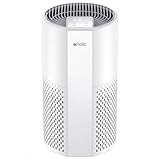
Afloia Air Purifier for Home, 4-in-1 Washable Filter for Allergies, Covers Up to 1076 ft², Quiet Operation, Auto Shut-Off & Night Light, Removes Pet Dander, Pollen, Dust, Mold, and Smoke, White,Pluto | Check Price On Amazon |

|
Nuwave OxyPure ZERO Air Purifier with Washable and Reusable Bio Guard Tech Air Filter, Large Room Up to 2002 Ft², Air Quality Monitor, 0.1 Microns, 100% Capture Irritants like Smoke, Dust, Pollen | Check Price On Amazon |

|
Air Purifiers for Home Large Room Up to 1,996 Ft², EOEBOT Air Purifier for Home Pets with Washable Filter, Quiet Sleep Mode, Air Quality Monitor, Air Purifier for Bedroom, Pet Hair, Dust, Smoke, White | Check Price On Amazon |
|
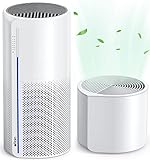
Afloia 2 IN 1 Air Purifier with Humidifier Combo, 3-Stage Filters for Home Allergies Pets Hair Smoker Odors, Evaporative Humidifier, Auto Shut Off, Quiet Air Cleaner with Seven Color Light,White | Check Price On Amazon |
Decoding Performance Metrics: CADR, ACH, and Real-World Coverage Math
Clean Air Delivery Rate (CADR) measures the cubic feet per minute of filtered air delivered for specific particle categories. Manufacturers calculate room coverage at just 2 air changes per hour (ACH), which barely cycles the air for healthy adults. Allergy and asthma sufferers require 5 to 6 ACH to maintain clinically meaningful symptom reduction throughout the day. You should verify every specification using the PM2.5 monitor devices to see real-time CADR performance.
CADR Calculator
How Much CADR Do You Actually Need?
Enter your room dimensions and use case. Formula: (length x width x ceiling height x ACH) divided by 60. Source: AHAM methodology.
CADR equals length times width times ceiling height times ACH divided by 60. For allergy and asthma sufferers, always calculate at 5 ACH, not the manufacturer-stated 2 ACH figure.
| Room Size | CADR at 2 ACH (standard) | CADR at 5 ACH (allergy) | Example Models |
|---|---|---|---|
| 150 sq ft bedroom | 100 CFM | 250 CFM | Levoit Core 300, Coway AP-1512HH |
| 300 sq ft bedroom | 200 CFM | 500 CFM | Winix 5500-2, Levoit Core 400S |
| 500 sq ft living room | 333 CFM | 833 CFM | Coway Airmega 400, Blueair 605 |
| 700 sq ft open plan | 467 CFM | 1167 CFM | IQAir HealthPro Plus or 2 units |
| 1000 sq ft open plan | 667 CFM | 1667 CFM | Multiple units required |
Top Health Conditions That Benefit Greatest From Air Purification
Clinical evidence supports portable filtration for specific respiratory and immune vulnerabilities. Air purifiers support indoor air quality management and symptom reduction but are not medical devices or substitutes for prescribed treatment. We map dominant airborne triggers to specific filter requirements below.
Asthma & Allergic Rhinitis: Managing Pollen, Dust Mites, & Pet Dander
Asthma attacks and allergic rhinitis flare when immunoglobulin E reacts with inhaled allergens like dust mite feces and pet dander. True HEPA filters capture 99.97 percent of these IgE triggers while maintaining adequate airflow for continuous operation. The Asthma and Allergy Foundation of America certifies units that demonstrate measurable reductions in airborne triggers under standard household conditions. You should check the AAFA certified air purifier options for verified allergy performance. Look for Coway AP-1512HH as a benchmark for certified performance.
COPD & Chronic Respiratory Vulnerability: Reducing PM2.5 Cardiovascular Load
Fine particulate matter (PM2.5) penetrates deep lung tissue and enters the bloodstream, triggering systemic inflammation in patients with chronic obstructive pulmonary disease. Continuous filtration at 4 to 6 ACH keeps baseline PM2.5 below EPA safety thresholds in enclosed living spaces. Studies published in respiratory medicine journals link sustained PM2.5 exposure to increased hospital admissions and reduced peak expiratory flow rates. Blueair Blue Pure 211+ delivers high smoke CADR for larger COPD recovery rooms.
Chemical Sensitivity (MCS) & VOC Intolerance: Why Carbon Weight Matters
Multiple Chemical Sensitivity patients react to trace concentrations of volatile organic compounds emitted from building materials and household cleaners. Light carbon layers saturate within weeks, forcing sufferers to replace filters constantly without meaningful chemical exposure reduction. Deep carbon beds weighing several pounds maintain adsorption capacity long enough to lower TVOC levels below irritant thresholds. Review our detailed carbon capacity guide for exact weight requirements. The Austin Air HealthMate uses heavy carbon for serious chemical sensitivity.
Immunocompromised Individuals & Infection Risk: Airborne Particle Reduction Limits
People undergoing chemotherapy or living with autoimmune conditions face severe consequences from airborne pathogens and dust-borne microbes. While filtration does not sterilize room air, it significantly reduces the carrier burden that transports viruses and bacteria through ventilation drafts. Maintaining 4 to 6 air changes per hour lowers the probability of airborne pathogen settling on high-touch surfaces. Combine filtration with regular HVAC maintenance for comprehensive indoor protection. IQAir HealthPro Plus provides medical-grade particle capture.
Health Condition Guide
Find the Right Air Purifier for Your Situation
Select your primary concern and room size for a personalized filter type and CADR recommendation.
Everyday Situations Where Clean Air Becomes Non-Negotiable
Indoor environments shift dramatically based on seasonal changes, construction activity, and outdoor pollution events. You must adjust your filtration strategy to match the dominant pollutant profile in your specific living situation. Standard 1 to 2 ACH operation leaves residents exposed during high-stress periods.
Residing Near Wildfire Zones or High-Traffic Urban Corridors (AQI >100)
Wildfire smoke carries ultrafine carbon particles that infiltrate even well-sealed standard residential construction within hours. Urban corridors accumulate PM2.5 and nitrogen oxides from diesel exhaust, which steadily degrade baseline indoor air quality. You need smoke CADR ratings above 300 CFM to keep indoor particulate counts below outdoor AQI warnings. Check local air quality indicator devices to track infiltration rates.
Multi-Pet Households & Persistent Odor/Allergen Load
Pets shed dander continuously while introducing skin flakes and saliva proteins that trigger allergic responses in sensitive family members. Standard air cleaners struggle with heavy odor loads unless the carbon filter contains sufficient adsorption mass to handle volatile compounds. Washable pre-filters capture heavy fur before it clogs the fine HEPA stage, extending overall filter lifespan. You must prioritize units with washable stages and thick carbon media for multi-pet homes. The RabbitAir MinusA2 pet filter variant handles heavy dander effectively.
New Construction, Renovations & High-Offgassing Environments (Formaldehyde/Paint VOCs)
Fresh lumber, engineered wood flooring, and new paint formulations off-gas formaldehyde and toluene continuously during the first twelve to eighteen months. High ventilation rates help temporarily but waste energy during extreme outdoor temperatures. Sealed rooms require aggressive carbon filtration to prevent chemical accumulation that causes chronic headaches and mucosal irritation. Understand complete terminology distinctions before buying offgassing solutions. Complete terminology guide explains the differences clearly. The Alen BreatheSmart 45i carbon model handles renovation VOCs effectively.
Sleep Optimization & Home Office Cognitive Performance (CO2/PM Interaction)
Elevated PM2.5 and poor ventilation reduce oxygen delivery efficiency, which directly impairs cognitive function and sleep architecture. Quiet operation below 30 decibels ensures continuous overnight filtration without disrupting restorative sleep cycles. Home office workers spend prolonged hours in enclosed spaces, making cumulative particle exposure significantly higher than daily averages. Quiet HEPA bedroom purifiers maintain cognitive performance overnight.
How to Specify an Air Purifier for Maximum Respiratory Benefit
Proper sizing requires calculating room volume rather than relying on manufacturer coverage claims. Medical guidelines demand higher air turnover rates than standard home comfort settings.
Calculating Required ACH: The 4x to 6x Rule for Medical Needs
You multiply room length, width, and ceiling height to determine total cubic footage before applying the appropriate ACH multiplier. Standard households require 2 air changes, while allergy or asthma management demands 5 air changes per hour. Divide your calculated volume by 60 to find the minimum smoke CADR required for continuous medical-grade turnover. Learn how to track air changes accurately with particle counting tools.
Matching Filter Stack to Dominant Pollutant Type
Particle-heavy environments like wildfire zones or high-pet households require deep folded HEPA media rather than wide open airflow designs. Chemical exposure environments demand heavy carbon beds with extended dwell time for effective gas-phase adsorption. Hybrid households need balanced filter stacks that do not sacrifice one function for the other. Read our filter lifespan expectations guide to avoid premature failure.
Strategic Placement, Airflow Clearance, & Avoiding Short-Cycling
Intake and exhaust vents require 12 to 18 inches of unobstructed clearance to maintain designed airflow velocity. Placing units directly in room corners forces recirculation loops that leave the majority of room air untreated. Position purifiers near dominant pollutant sources like open windows during AQI spikes or bedroom doorways for optimal distribution. Smart air purifier connectivity options help automate placement optimization.
Buying Guide
Before You Buy an Air Purifier, Complete Checklist
Check off each point before making your decision. Based on AHAM and EPA buying guidance.
Myths vs Evidence-Based Facts in Air Purification Marketing
Aggressive marketing claims frequently obscure fundamental engineering limitations that determine real health outcomes. We separate tested performance data from industry speculation below.
One Room Purifier Cleans the Whole House (ACH Reality Check)
Portable units only clean the air within their sealed performance radius, which rarely extends beyond a single bedroom or living room. Doorway placement improves inter-room transfer but cannot generate the airflow required to clear open floor plans exceeding 800 square feet. Multi-level homes require strategically distributed units to achieve uniform air turnover across different zones. Multiple air purifier setups provide whole-house coverage.
HEPA Filters Remove Active Mold Growth (Spores vs Surface Colonies)
True HEPA media efficiently captures airborne mold spores as they circulate through room ventilation currents. Filtration cannot penetrate drywall, carpet padding, or bathroom tile grout where active mycelium colonies thrive. You must physically remediate standing mold sources before relying on air cleaners for spore management. Dehumidifier combo units help prevent future spore germination.
Ozone or Ionizing Devices Are Safer Than Filtered Air (CARB/EPA Guidance)
The California Air Resources board limits ozone emissions from residential devices to exactly 0.050 parts per million under continuous operation. Ozone generators intentionally exceed this limit, causing documented airway inflammation and worsening respiratory symptoms in sensitive populations. Ionizers merely charge particles so they settle on surfaces, creating cleaning problems without removing contaminants from your home. Review our ozone generator warning guide before purchasing non-filtered options. Note that standard AC units do not provide this removal level, as explained in our comprehensive AC vs purifier breakdown guide.
Frequently Asked Questions (Air Purification for Health Conditions)
Does an air purifier actually help reduce asthma and allergy symptoms?
Yes, certified True HEPA filtration removes IgE triggers like pollen and dander when operated at 5 air changes per hour. The AAFA certification program verifies measurable allergen reduction under real household conditions. Continuous operation maintains baseline particle counts below symptom flare thresholds.
Standard manufacturer sizing assumes minimal turnover, so allergy sufferers must calculate room volume carefully. You will experience the fastest relief when combining filtration with source control strategies like regular bedding washing. The allergy HEPA replacement filters cost keeps long-term management affordable.
What is the safest option for chemical sensitive individuals?
Deep activated carbon filters weighing multiple pounds provide reliable VOC adsorption without generating secondary ozone byproducts. Light carbon media saturates within weeks and forces frequent replacements that disrupt symptom management strategies. Always verify CARB certification to ensure zero ozone generation in occupied spaces.
Sealed filtration pathways prevent air bypass that would otherwise carry untreated chemicals into your breathing zone. Heavy carbon filtration systems deliver extended chemical removal capacity for sensitive households.
Should I run the unit continuously or only when visible pollution is present?
Continuous operation maintains consistent air turnover rates that prevent particle accumulation during overnight hours. Auto mode relies on built-in sensors that react to pollution spikes rather than preventing baseline concentration buildup. Leaving the unit on sleep mode ensures quiet background filtration without increasing energy costs significantly.
Manufacturers design filtration motors for thousands of continuous operating hours. You can find energy star certified options that cost less than ten dollars annually to operate continuously.
How do I know if my air purifier is actually cleaning the air effectively?
Independent PM2.5 sensors placed directly in the exhaust stream versus room center provide immediate feedback on particle reduction efficiency. A healthy system maintains room readings at least 50 percent below outdoor baseline during normal operation. Sudden performance drops usually indicate filter saturation or airflow obstruction rather than mechanical failure.
Check pre-filter condition monthly and track exhaust airflow velocity annually to catch maintenance needs before efficiency collapses. Home air quality monitoring devices give you precise particle data.
Can an air purifier remove wildfire smoke completely during hazardous AQI events?
Portable units significantly reduce indoor particle infiltration but cannot completely seal structural gaps that allow smoke migration outside. You must combine high smoke CADR operation with active window sealing and HVAC recirculation settings during peak pollution days. Heavy carbon layers also capture smoke odors that standard media leave behind.
Replace filters immediately following severe event exposure to prevent trapped pollutants from re-entering your living space permanently. Wildfire smoke specific filters handle extreme particle loading.
How long do True HEPA filters actually last under heavy medical use?
Running an air cleaner at 5 to 6 ACH accelerates filter loading, which typically shortens standard manufacturer lifespans by three to four months. You will need to replace media when airflow drops noticeably or when the built-in pressure sensor triggers the replacement alert. Checking filter condition monthly during high-pollution seasons prevents secondary contamination.
Washable pre-filters extend primary stage life significantly by capturing heavy debris before it reaches the fine HEPA matrix. Review our expected lifespan guide for brand-specific maintenance timelines.
Conclusion
Proper air filtration transforms baseline indoor environments into protected breathing spaces for respiratory and chemical-sensitive residents. Medical guidelines clearly demonstrate that continuous 5 to 6 ACH operation with True HEPA and heavy carbon media delivers the only reliable symptom relief path. You must calculate your exact room volume, match the filter stack to your primary pollutant, and verify CARB compliance before making any purchase decision. Select a unit sized for 5 ACH turnover today and verify the installation placement before your next high-pollution event.